We got to Kansas city on a Thursday. By Friday we had learned a thing or two. We learned that the best route at morning rush hour was to circle from KC Missouri around to the north on I-435 to KC Kansas in order to make our way onward to Topeka, Abilene, Salina, and Oakley, and eventually to Colorado Springs, Colorado.
Alas, the best laid plans of men and deer gang oft agley. Our route coincided with the plans of a suicidal doe playing in the second lane of I-435 around the 14-15 mile marker to the west of KC Kansas. The intersection of our respective journeys at highway speeds in close quarters traffic did not result happily for the doe, nor for our vehicle.


The deer had apparently not gotten the memo that the range where the buffalo roamed and the deer and the antelope played had been paved over, and the buffalo and antelope now played elsewhere. This was Paula’s first vehicular encounter with a deer, and she was upset for the rest of the day. Later, insurance claims, deductibles, and inconvenience yet to come rose to the surface. The car is quite drivable, and continues unimpeded toward Colorado and Oregon.
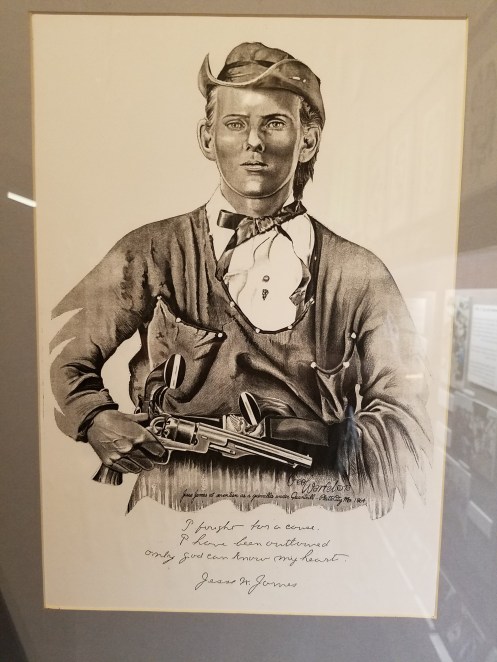 Jesse James is Paula’s 6th cousin, three time removed. Three generations up and six collateral lines over. Distant, but still kin. In years past we have visited places associated with Jesse in Arkansas, places that he visited and hung out with family and friends. We felt it was important to visit the home that he had with his wife Zerelda and his children in later years, when he lived in St. Joseph, Missouri under the name of Thomas Howard.
We found his house without much trouble.


Admission was $4 each, and the Four-room house is filled with period furniture and displays. James was married to his first cousin, Zerelda Mimms, who survived him by eighteen years.
The story is that the “dirty little coward that shot Mr. Howard” in April 1882, was one of the last two members of the James Gang, Robert Ford, who hoped to collect the $5,000 reward offered by the Missouri Governor Crittenden. While Jesse was standing on a chair to straighten a picture, Ford drew his gun and shot Jesse in the head.
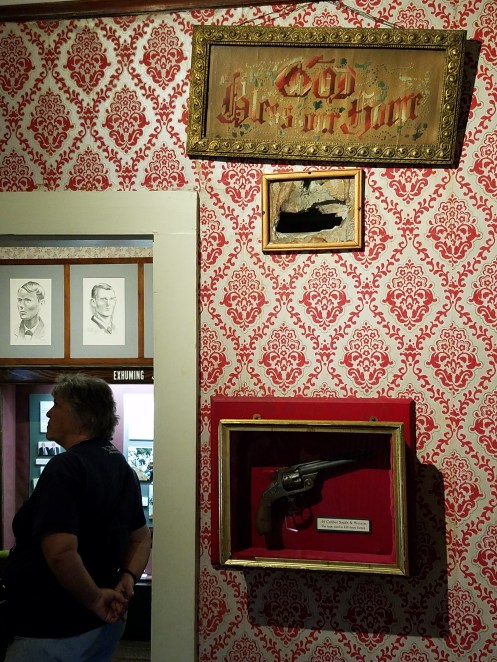
The living room in which Jesse was shot includes a purported hole in the wall, since enlarged by gawkers and souvenir seekers. There has been some controversy about the hole, since there was conflicting testimony whether there was an exit wound, but circumstances might suggest that Ford’s .44 pistol was fired at 3-4 feet range at his head, and would probably have exited. James was buried at the Samuels-James Family farm near Kearney MO, but was later moved to Mt. Olivet cemetery in Kearney with his wife, Zerelda. They occupy space in the Samuels plot and are flanked by Reuben and Zerelda Samuel.


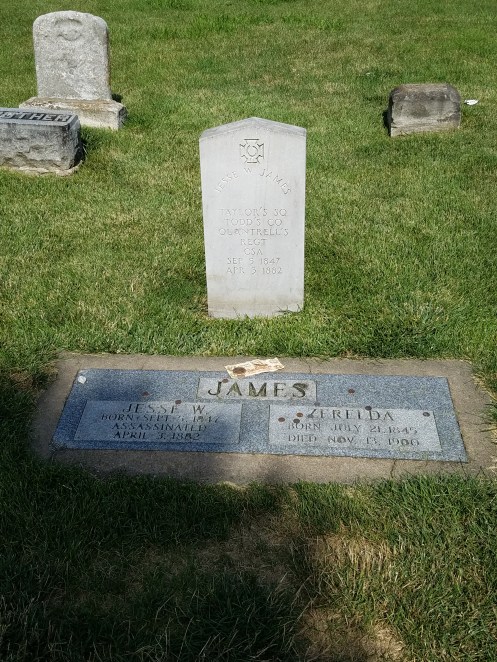
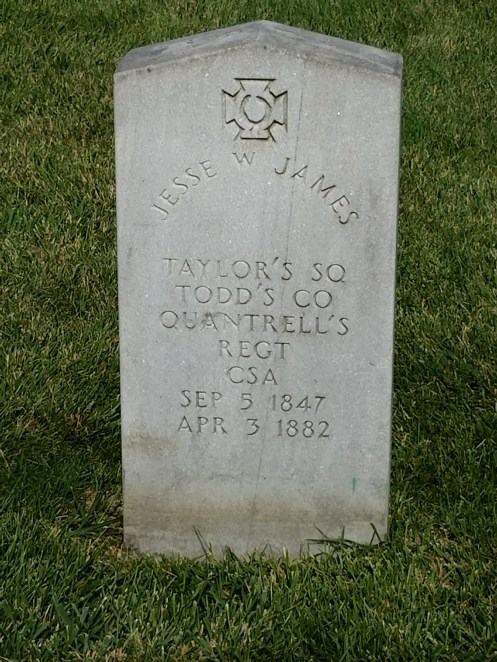
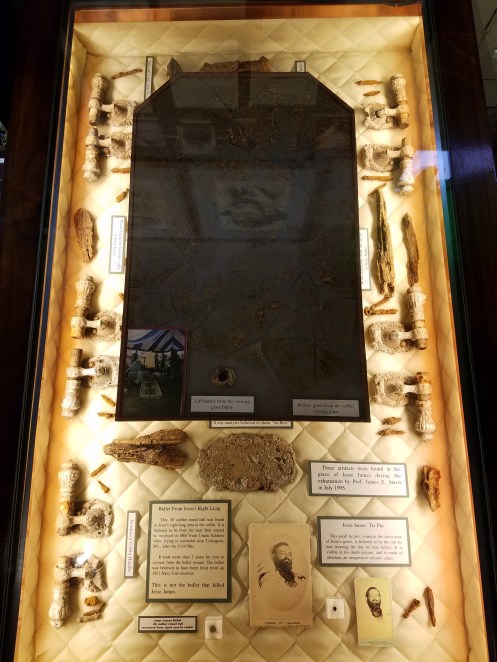
Due to stories and rumors that Jesse had faked his death and lived out his life elsewhere, a forensic pathologist was successful in getting the remains exhumed in 1995, and by tracing mitochondrial DNA from known later collateral relatives and descendants, confirmed that the remains were indeed those of Jesse James. A case in the house displays other artifacts recovered in the exhumation, including coffin handles, shards of the coffin viewing glass panel, his tie pin, and a bullet from his right lung from an earlier shoot-out. No trace of the bullet to his head was found.
Incidentally, for his actions, Robert Ford was later tried, convicted, sentenced to hang, and pardoned by the Governor all in the course of one day, and was murdered by a fellow gang member a couple of years later.
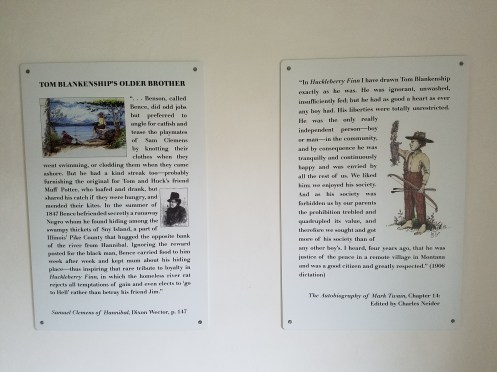
Huck was modelled on Tom Blankenship, a local romantic ne’er-do-well of Clemens’ age and acquaintance. Tom’s older brother Benson is the model for Muff Potter. The Blankenship house is also on the Historic Site grounds, equipped as it might have been in the day – barely, that is.
Tom Sawyer fell instantly for Becky Thatcher. Becky was modelled on Twain’s own first infatuation, Laura Hawkins. Her home is across the brick street from Clemens’ home and is a museum of daily life in Hannibal.
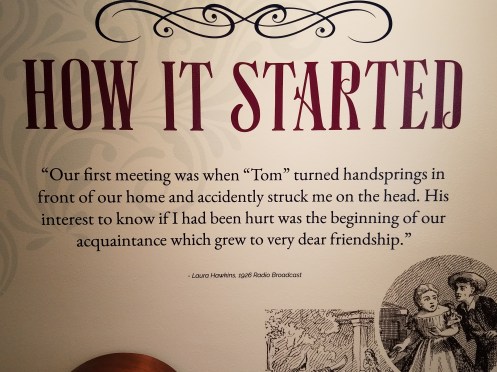
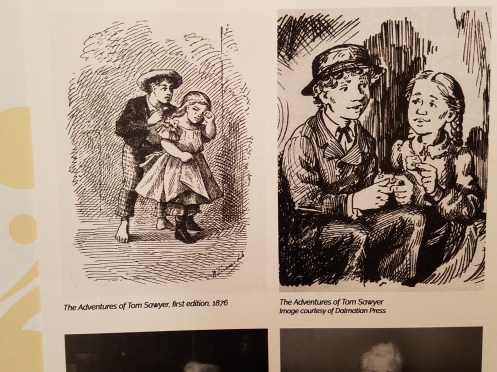
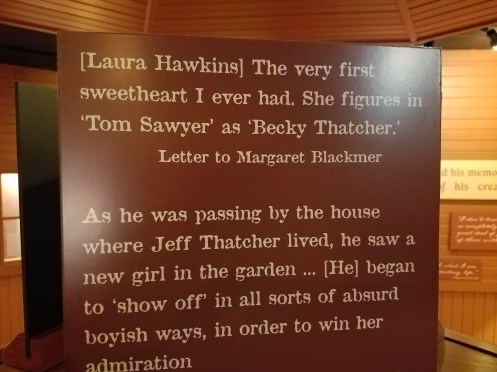
And while it started very early, the friendship grew with the two. She was a looker.
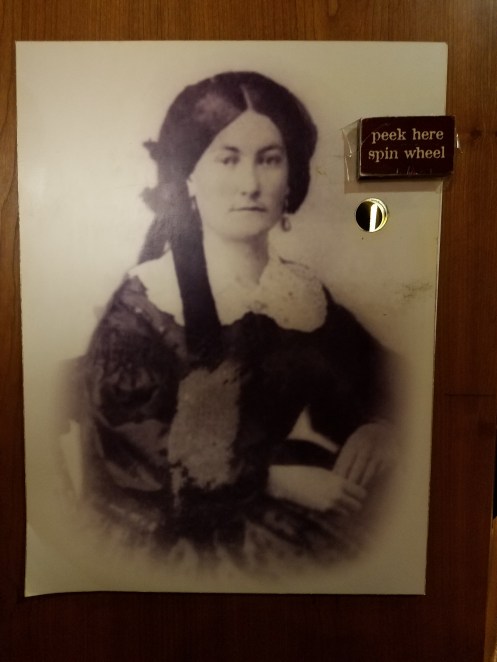
If you peek in the keyhole upper right and spin the wheel, you see a boy turning cartwheels.
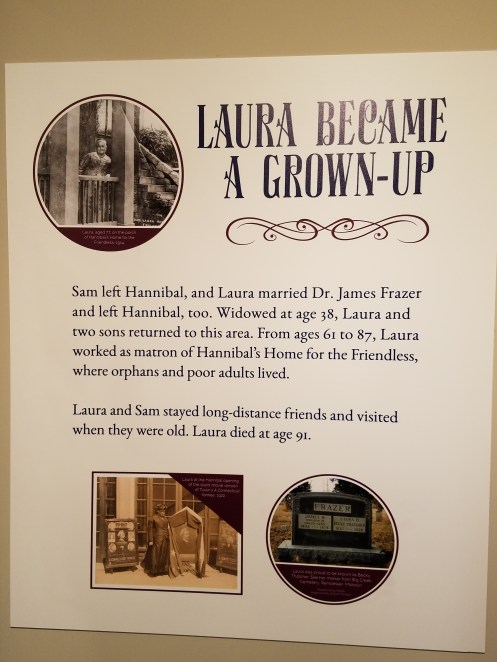
And the two remained friends into elder years.

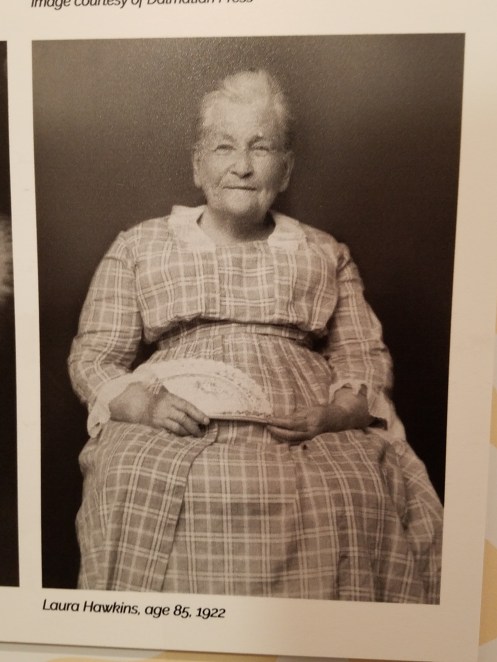
Paula is convinced that Laura displays features reminiscent of my oldest brother Dick. The Hawkins’s came from Missouri and settled in Texas during the Civil War, so perhaps there is a collateral relationship to be genealogically investigated.
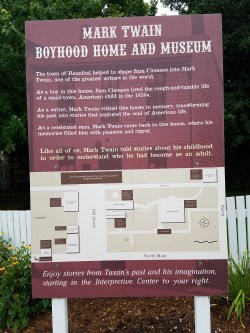
Our second stop of the day is a 1.5 hour jump to Hannibal MO to hang out with Mark Twain in his boyhood home.
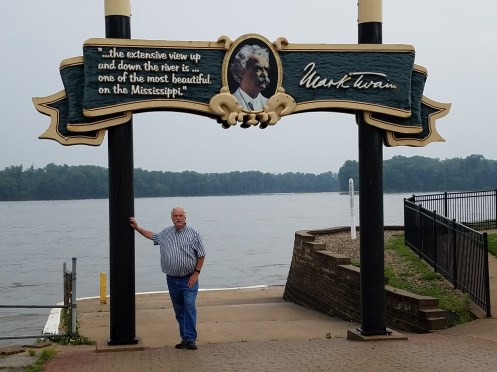
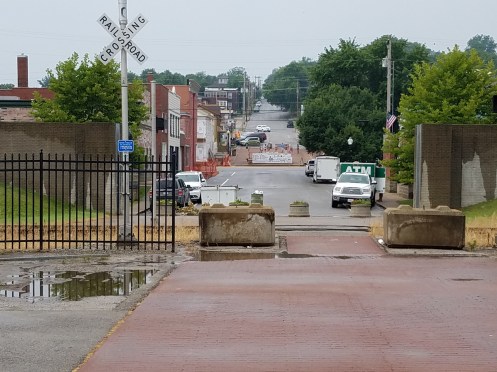
The home stands a block up from the levee, indicated by the water gate in the lower picture, above.
The front door, although entrance is through an interpretive center around the side.
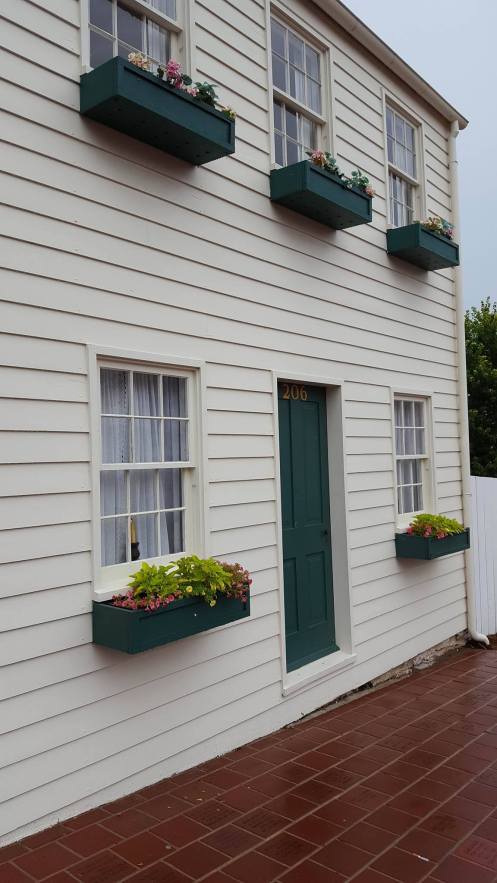
Acroos the street are the “Becky Thatcher House” and the law and Justice of the Peace office of Twain’s father.
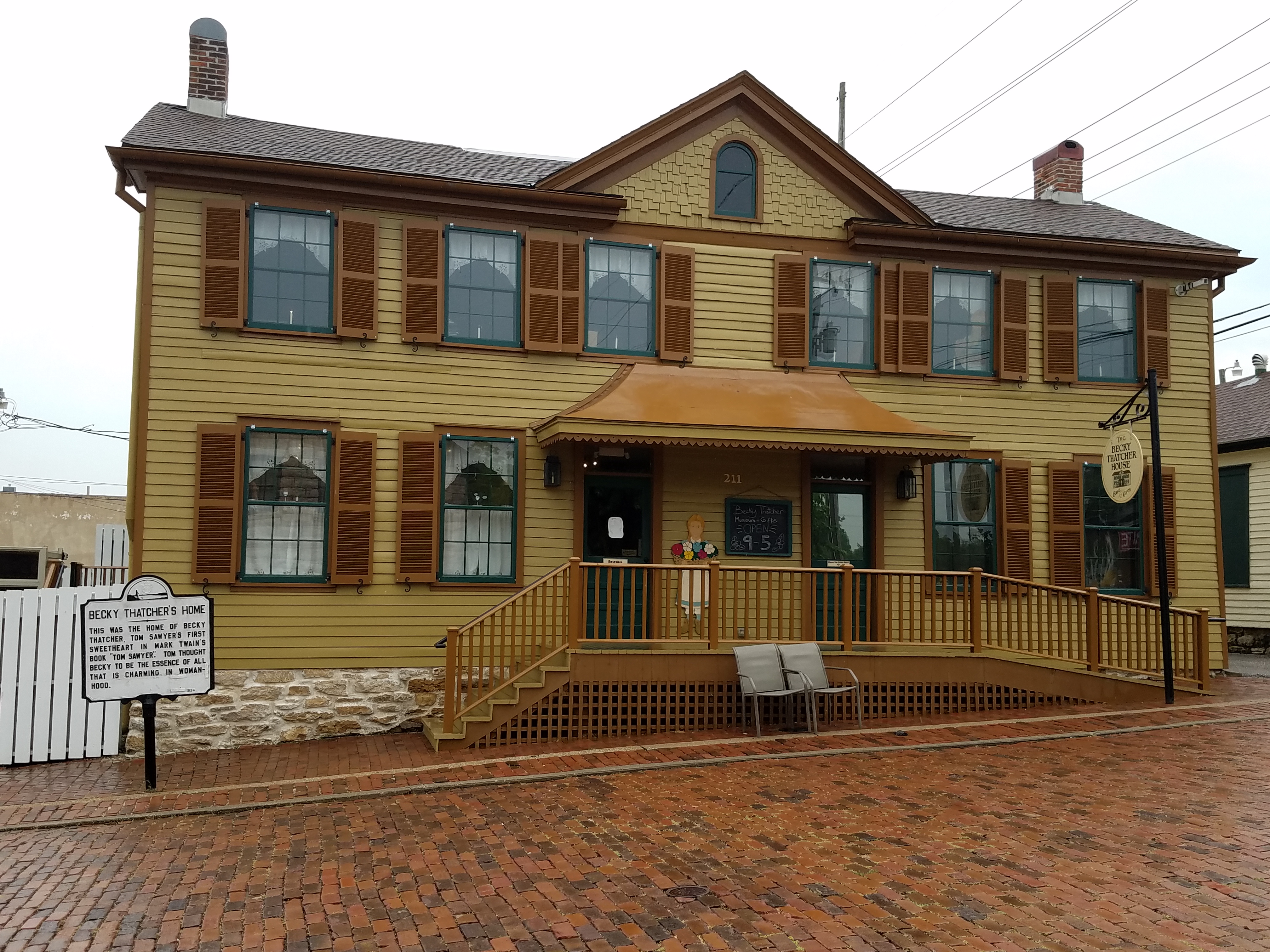
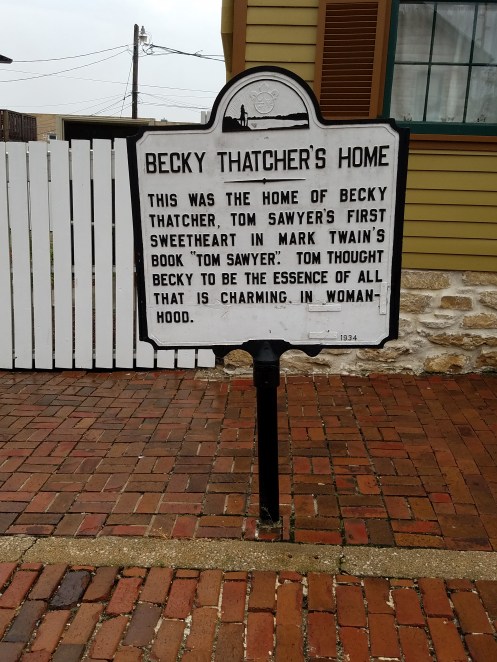
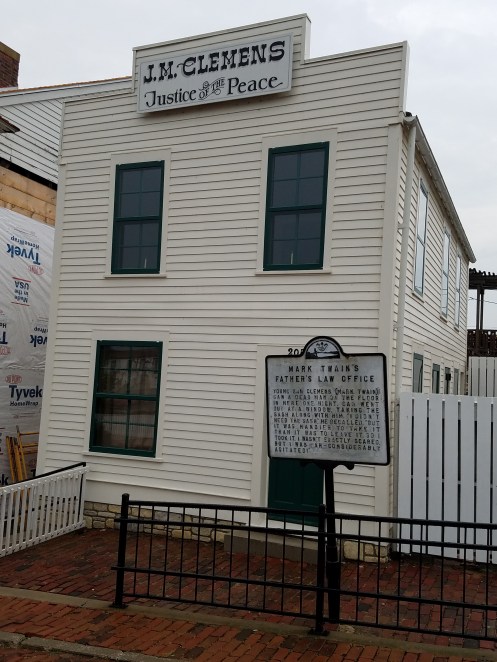

Clemens Sr did poorly at whatever he set his hand to, but he retained the title of Judge for the rest of his days.
We also visited the Lincoln presidential museum in downtown Springfield. Not far from the current capitol building and across the street from Union Station, where Lincoln departed and returned.

No pic of the outside of the Museum and Library, but the interior is indeed wondrous to behold.
We had our picture taken with the Lincoln family, which they endured with stoic silence.

I am almost as tall as Himself, but only because I’m wearing my elevator shoe inserts.
Abe and Mary sparking. She did all the talking, he sat in rapt attention.
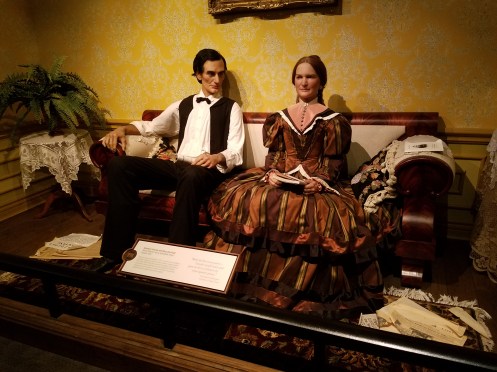
His child-rearing practices, indeed both their practices, pretty free and easy. Here Willy and Tad play inkwell baseball in the office of the law practice, while dad reads legal matters.
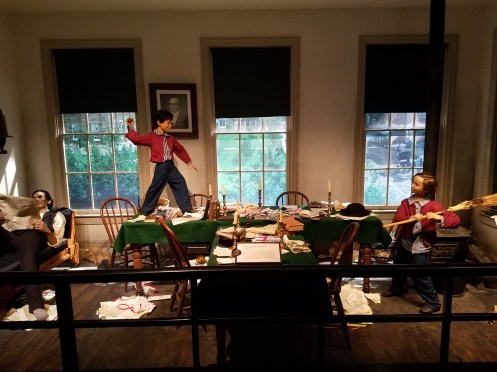
In the meantime at many southern ports and cities, slave auctions continue, protested by Sojourner Truth and William Douglass.


Generals McClellan and Grant share polite conversation on the porch of the White House in later years, despite strategic differences and despite a disproportion of military success.
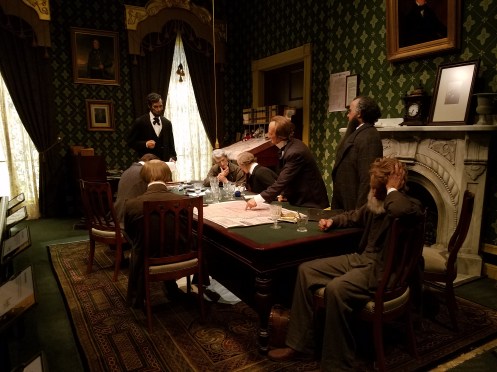
Lincoln discusses his proposed Emancipation Proclamation with his cabinet, amid vociferous support, cautious political optimism, doubt, and downright opposition within the very room.
With the war over, and feeling that he can once again laugh, Lincoln and Mary attend a performance of a comedy, Our American Cousin, at Ford’s Theater on Good Friday, 1865.

In his Civil War documentary, Ken Burns speaks about the point in the editing just before Lincoln is shot, wishing that time could stop and change course. But John Wilkes Booth is opening the door to the presidential box.

The funeral train did the journey from Washington D.C. to Springfield Illinois from April 21 to May 3. The lying in state at the Old Capitol is replicated in the museum, but is too dark and solemn to photograph.
The museum is far and away the best of the presidential museums we have visited. Dramatic, heart-warming, inspiring, educational, and thoughtful.
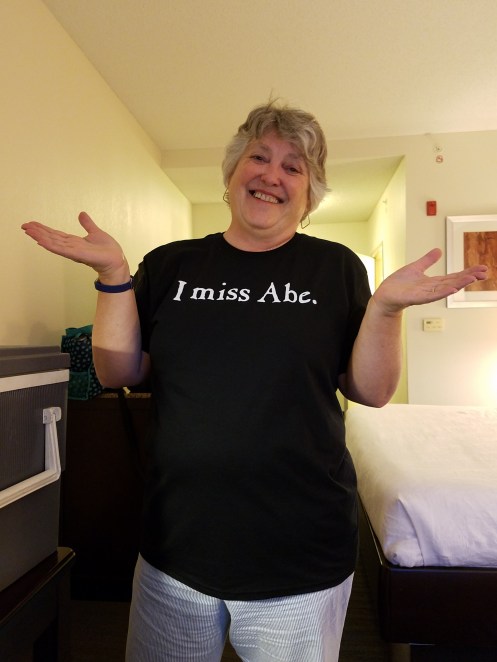
And in the museum shop, a prominent display of what appears to be relatively new wares was purchased and is modelled by Paula, and is duplicated in a wide variety of media – mugs, caps, key chains,t-shirts, etc.
A six hour drive gets us to Springfield IL. Our target time of departure was 7 AM, and we managed to pull out at 7:18. Pretty good for a couple of retirees. Breakfast in Madison at Perkins, home of the Paula-approved Mediterranean omelet, and the place is hopping. July 4 and people are traveling home for the most part, and Perkins is close to the interstate, and reliable. Then I-90 and 39 down past Rockford and Bloomington, arriving at Springfield around 2 PM. Gives us three hours to see Lincoln’s home and the Presidential Museum.
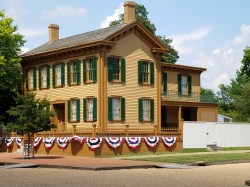
Lincoln and Mary lived here for 17 years as his law and political prowess grew, until he went to Washington only to come back home in a box. The home includes many original pieces and placement of furniture and replicas of period decorations confirmed by photos and drawing of the time. Rocking chairs, desks, bureaus and other items are interspersed with other non-original period pieces. Lincoln’s 9′ bed itself was lost in the Chicago Fire of 1871, having been sold to the renters of the Lincoln house and subsequently moved to Chicago with the family.
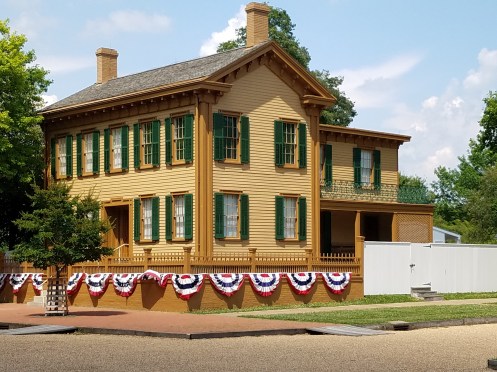
To the right is a balcony where Willy and Tad (10 and 7 years old at the time) would stand on and campaign for their father’s presidential run by hollering at passers by.
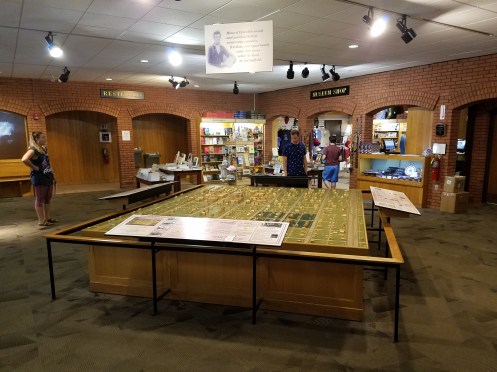
The Visitors Center includes this interactive map showing Springfield of the period, with little led lights that show the location of the home, the route of the funeral cortege in Springfield, and other significant locations.
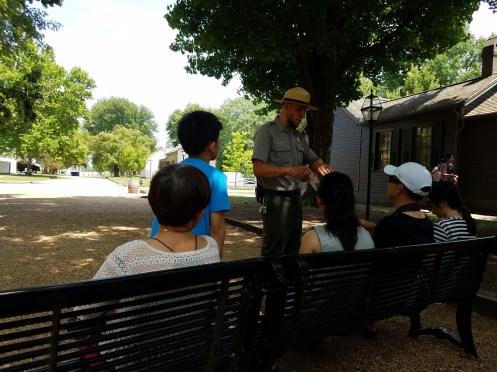
We were pleasantly surprised to encounter no crowds. In downtown Springfield you could shoot a Parrott Rifle down the street. The parking lot at the Lincoln home was only about 1/3 full. Tours of the Lincoln house are 20-25 minutes guided by a Park Service ranger. The tours are spaced five minutes apart beginning at some benches on the avenue. We secured a private tour due to the paucity of visitors, allowing us to linger in some rooms that the ranger said they normally breeze through.


Mary’s etagere, Lincolns stereopticon ($25 when the house cost $1,500), Mary’s commode, and the family’s formal parlors. The last is the private parlor where Lincoln received the news of his party’s nomination. He said he’d think about it, and accepted three days later. The children were not allowed in the formal parlors.

Mary’s Kitchen is equal in square footage to the cabin that Lincoln was born in. She had hired help and went through 16 hired girls in 17 years, but she ruled herown kitchen.
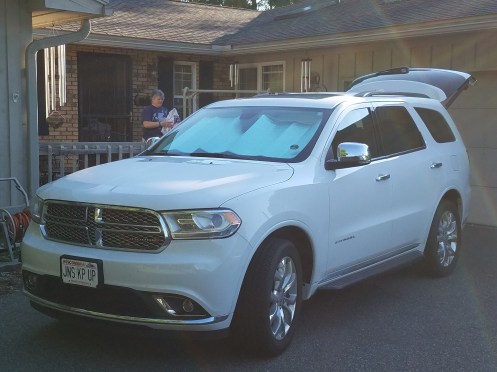
Bofin – Irish for “white cow” It’s our name for our large white Dodge Durango. Also a reference to the isle we love so well, Inishbofin – Island of the White Cow, located on the Wild Atlantic Way along the west coast of Ireland north of Galway Bay. We have had a cool and wet spring in Wausau, but the wild Atlantic storms chew at the island, removing shoreline, seawalls, and navigation aids. The residents endure the weather and isolation, but we assume they always keep an eye to the weather.
Bofin will be transporting us to the far west via interstates and secondaries, from our departure on July 4 until about July 22.
Derry (officially named Londonderry by the British) is a walled city, one of the few with a complete wall around the central city. It is known as the Maiden City, since its walls have never been breached. The wall is twelve to thirty-five feet thick in some places, with a promenade on top, so that it is possible to walk or parade around the city on the wall. This was part of the problem, as an annual march along the wall in 1969 by the all-protestant Apprentice Boys of Derry devolved into several days of warfare in Derry, known as the Battle of the Bogside. Derry is also a flashpoint city for the Troubles from the late 60’s to the late 90’s, along with other cities, and bombings across the UK, famous for conflicts between Republicans (mostly Catholic, but not exclusively) and Unionists (mostly Protestant, but not exclusively) quarreling over discrimination, privilege, inequality, and arrogance.
The coach drops us off at the Derry Tourist Center beside the river, and access to the central city is up by escalators through a multi-storey shopping mall,
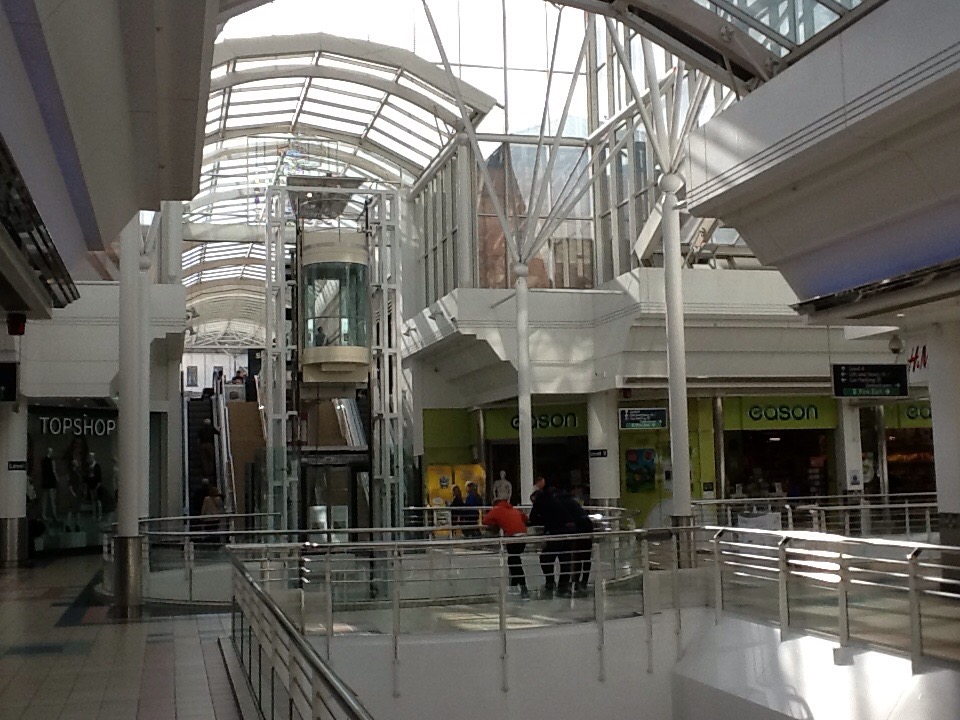
depositing us on a street below the wall. Garvin, our local tour guide, (in the yellow vest) leads us up onto the wall, and begins a heart-felt, warts-and-all presentation of the city’s history, with emphasis on the Siege of Derry and the heroism of the Thirteen Apprentices in 1688, which is part of the roots of the Troubles in Ireland and Derry in the last third of the Twentieth century.
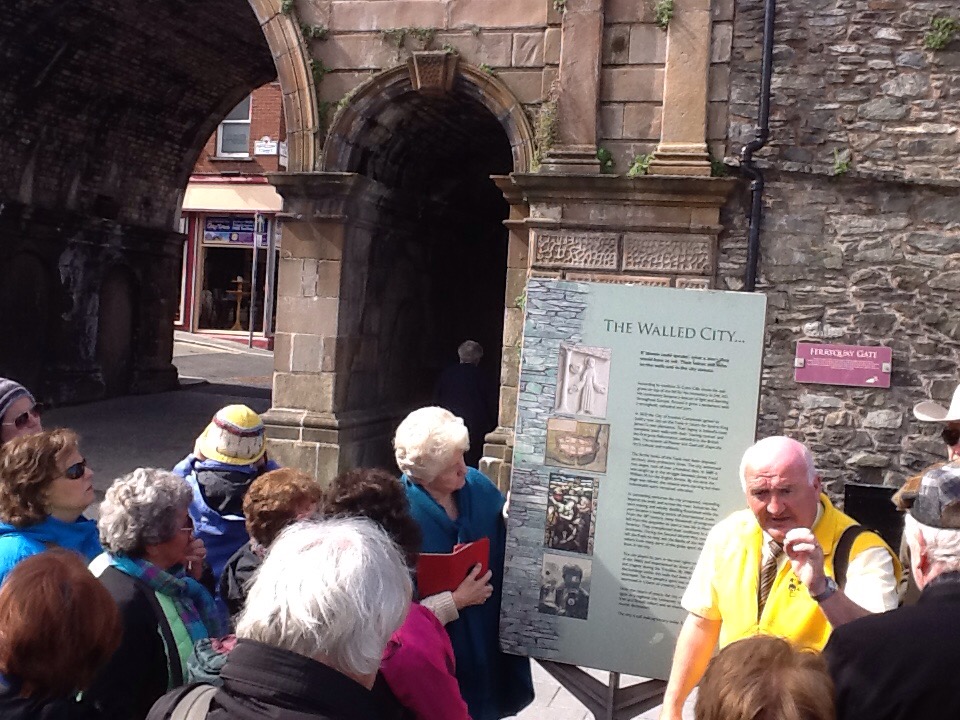
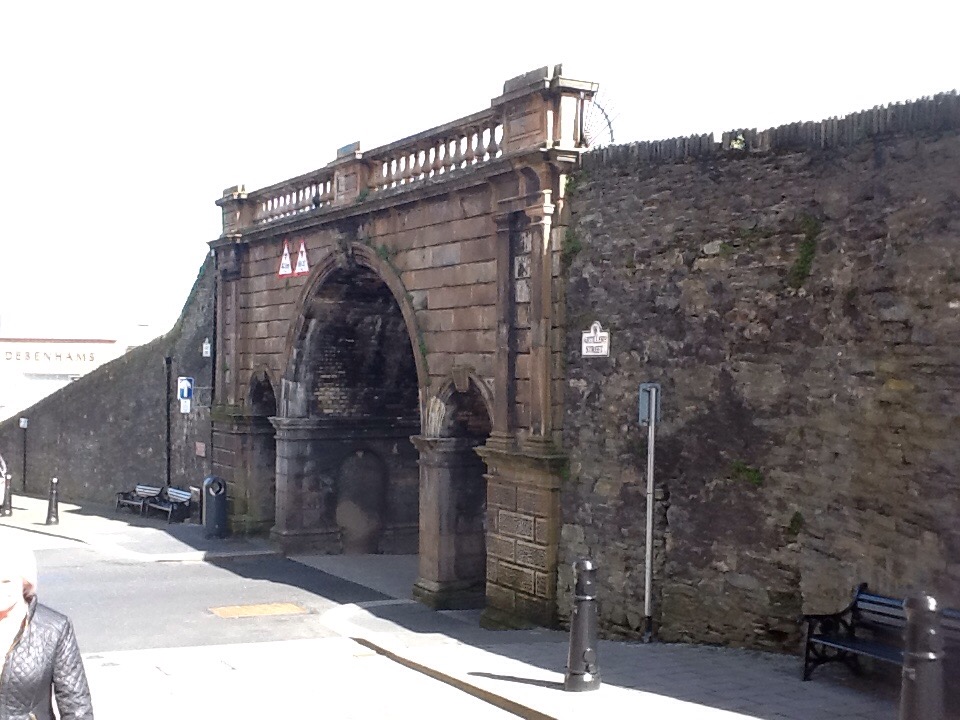
Bishops Street Gate
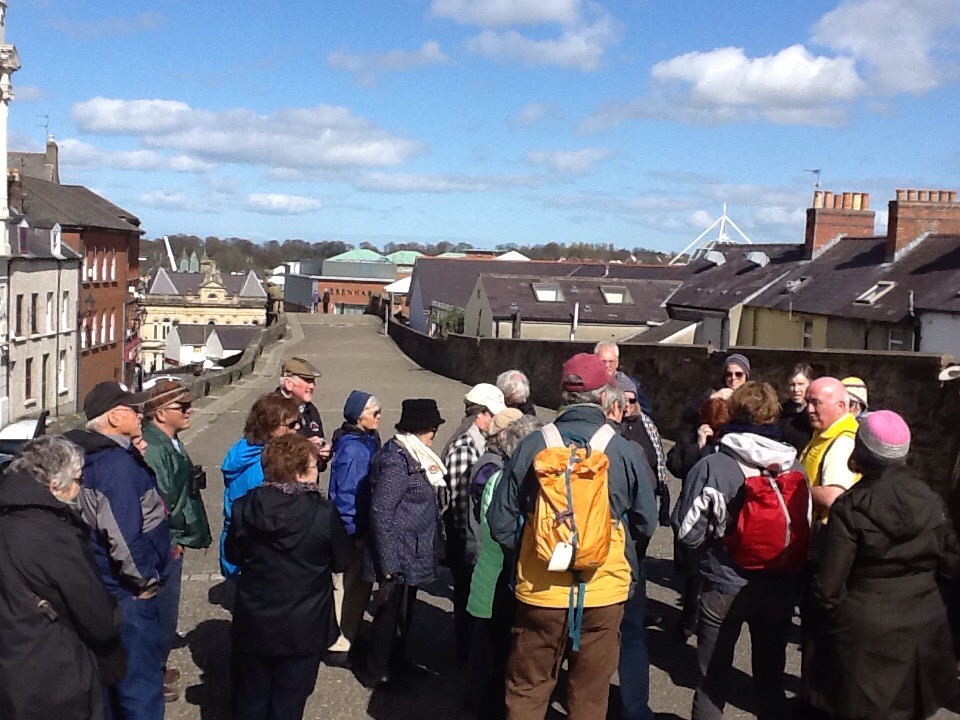
Atop the wall
Garvin is a proud, life-long citizen of Derry, and gives us a dramatic tour along the wall, pointing out sites of events, and describing personalities, events, intentions, discrimination, mistakes, motivations, politics, and pig-headedness that figure in the 300+ years of unionist, republican, nationalist, and international maneuvering.
In the 1980’s, the city council of Derry petitioned the Privy Council in London to change the “official” name back to Derry or Doire in Gaelic, which is how most residents, whether unionist or nationalist, refer to the city, but has had no answer yet. These things take time.
Phil Coulter composed the song The Town I Loved So Well about the city of Derry, which has become one of the great standards of contemporary Irish music. As he writes in the last verse, the city “will not forget, but their hearts are set on tomorrow and peace once again.”
This is reflected in Garvin’s urging for us to tell others about the efforts toward peace and reconciliation, still ongoing, and in the establishment of a Peace Garden below the walls

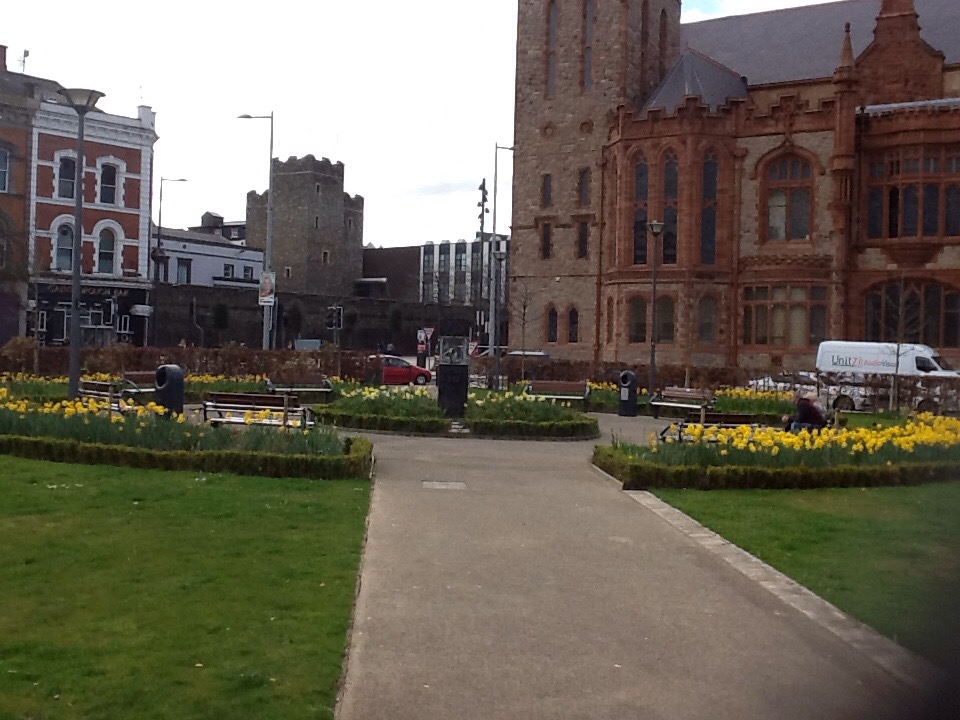
And the recent construction of the Peace Bridge across the Foyle River

This is a project started by the Mellon family, descendants of Thomas Mellon who emigrated from Ireland to Pennsylvania with his parents in 1818. First a lawyer, then a banker, he founded the Mellon Bank in Pittsburgh and became very wealthy.
The Folk Park is an open air museum consisting of buildings taken from around the province of Ulster, some transported and rebuilt, and some recreated. The purpose is to illustrate the living and migration from Ulster to America, and the museum is staffed by costumed re-enactors and demonstrators who explain about village life, migration and life in the New World.
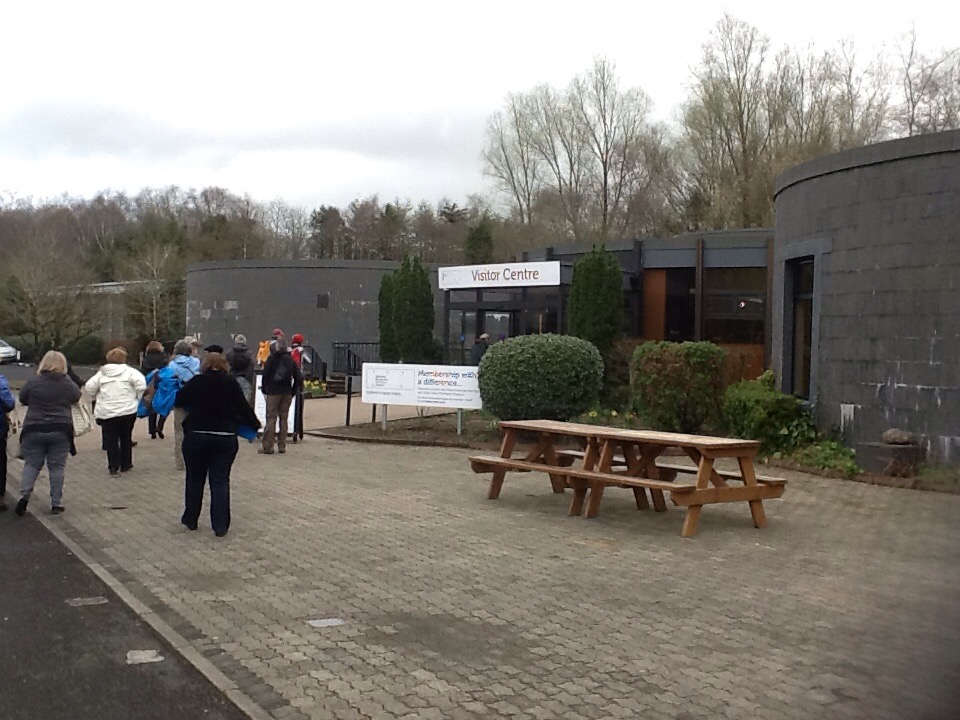 Our visit coincided with visits from several school groups of various ages, one of which was French high school-aged kids, so the re-enactors were having a field day. Paula was plagued by sore feet and stayed behind at the hotel, and being on my own, I got waylaid by the presentations, and didn’t see the whole park.

Mellon Homestead
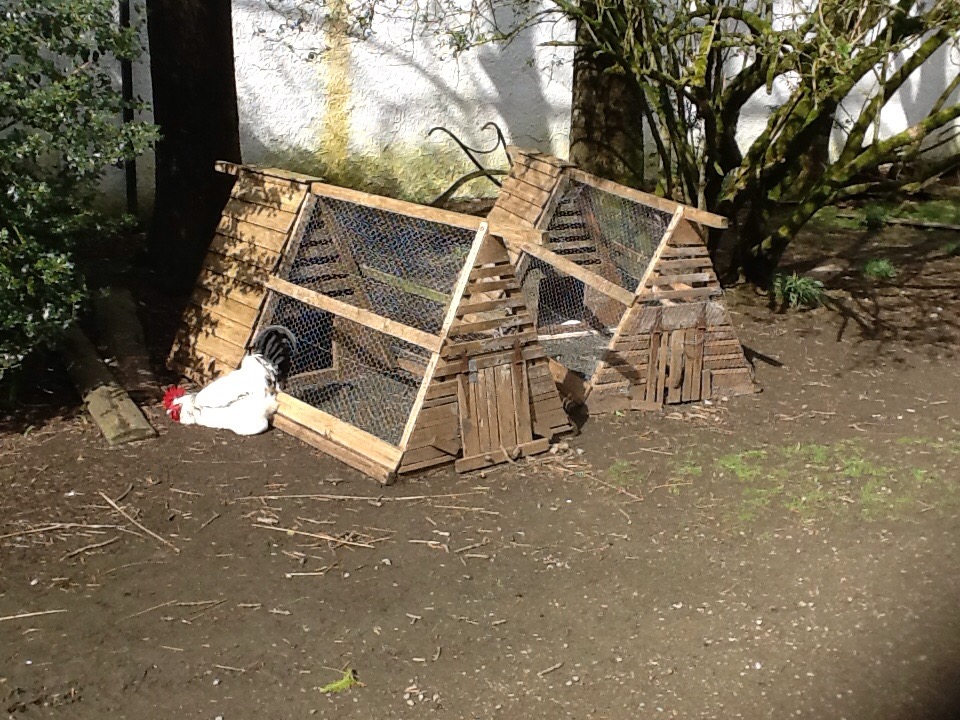
Chicken condos

Irish weaver’s cottage workroom

The tour includes a Belfast street with shops also staffed with re-enactors and with items for sale. There is even a ( non-funtioning) pub.

Printing shop, where they can ptint signs and handbills for use in the museum
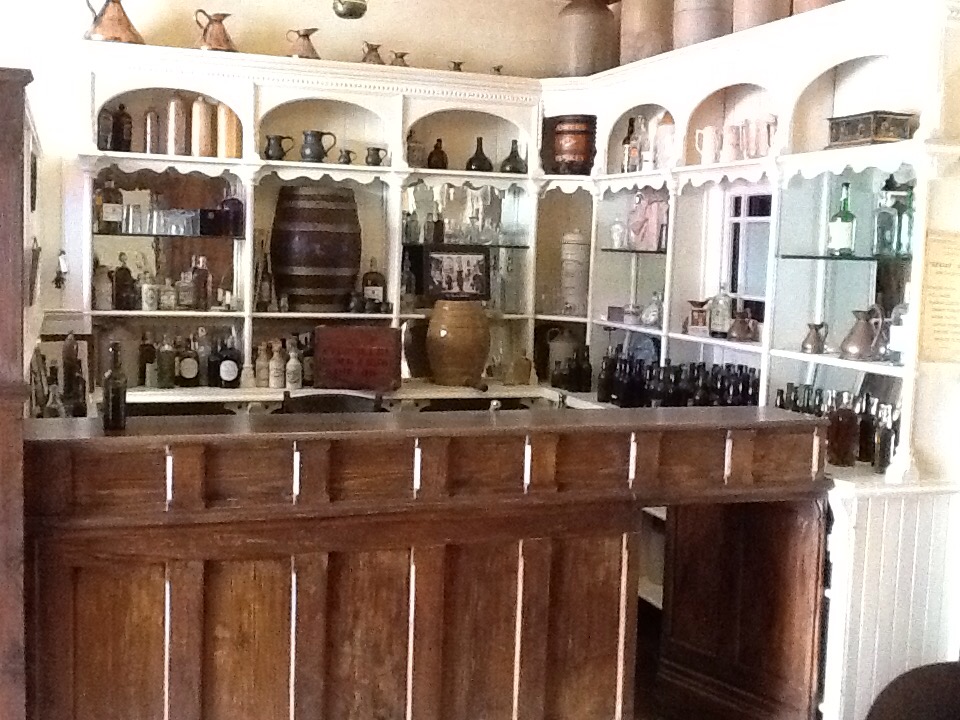
Pub
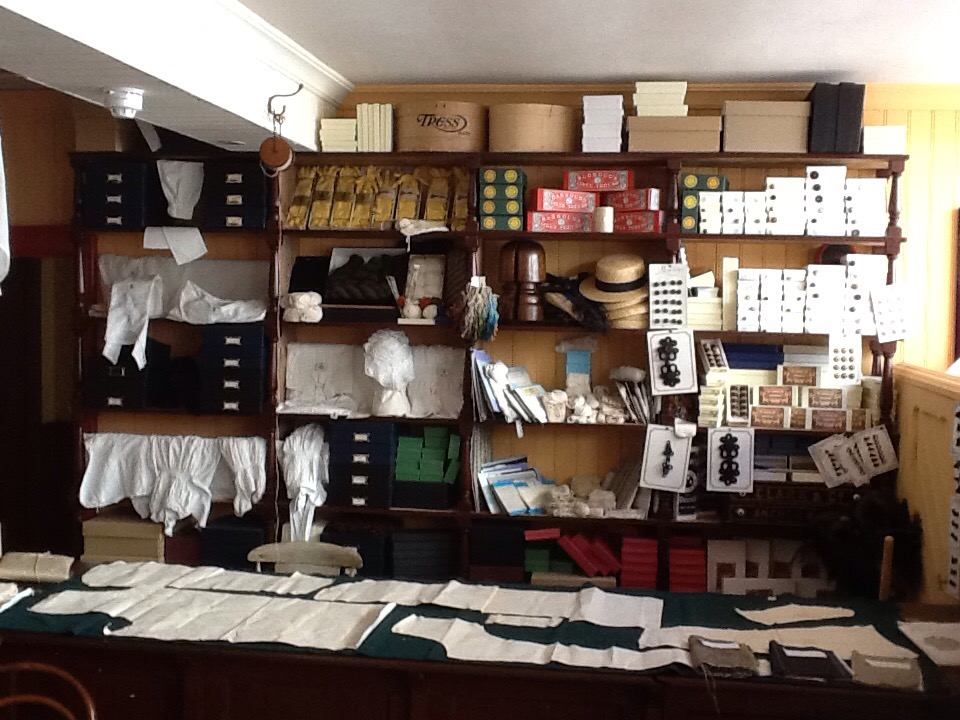
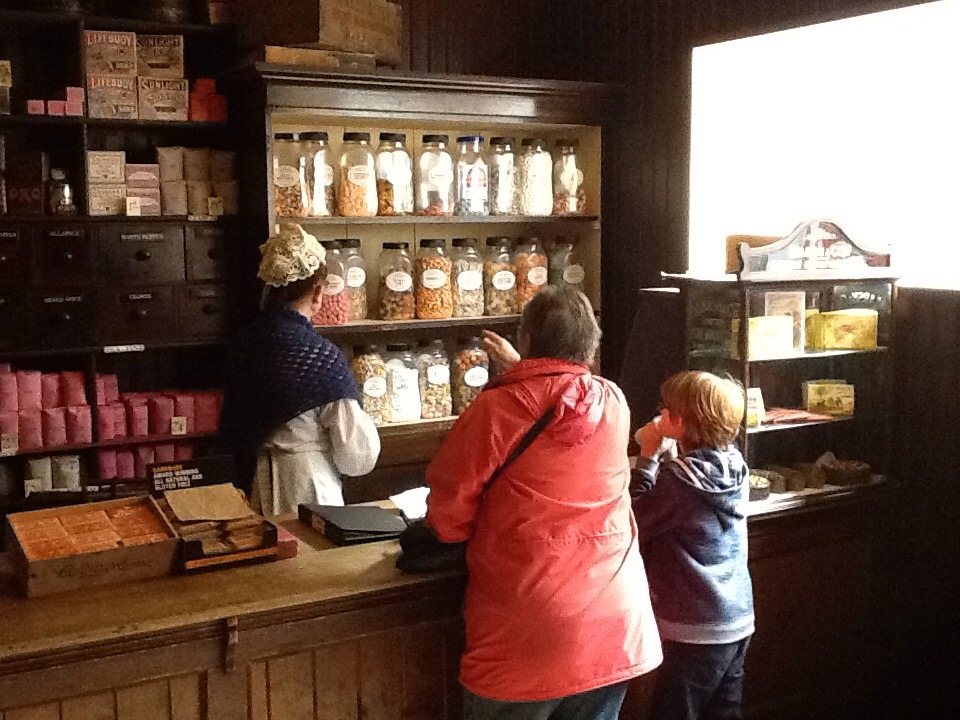
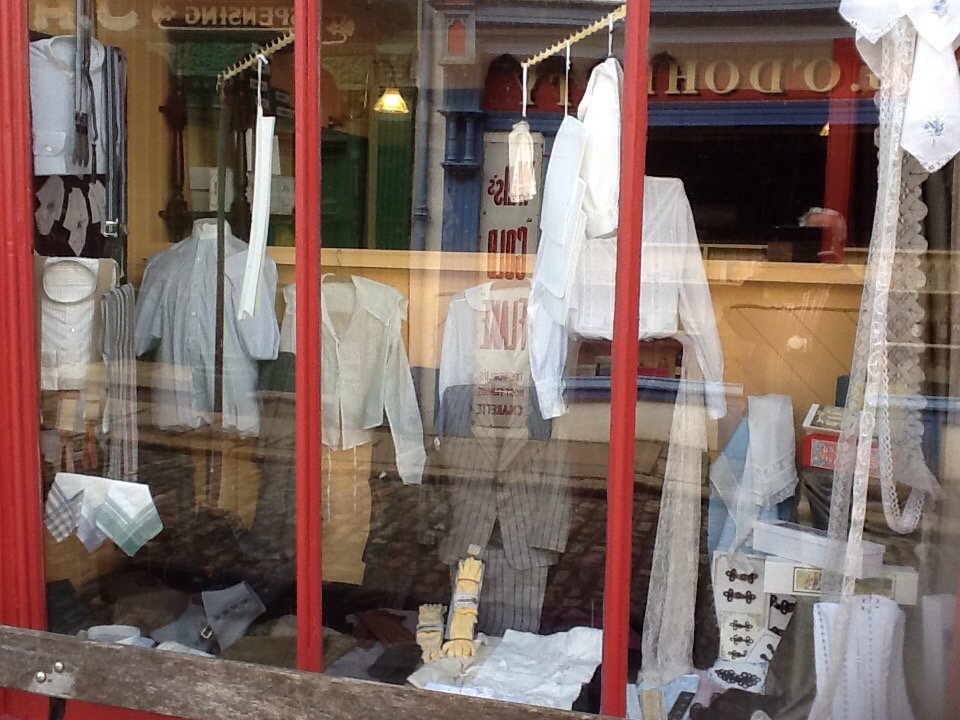

A period RV.
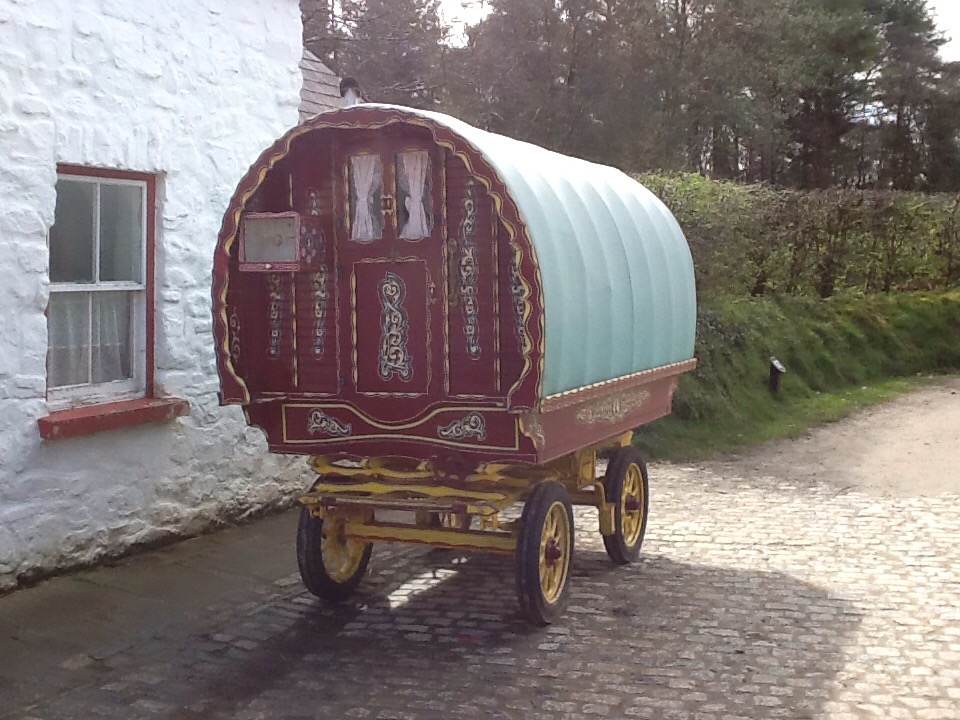
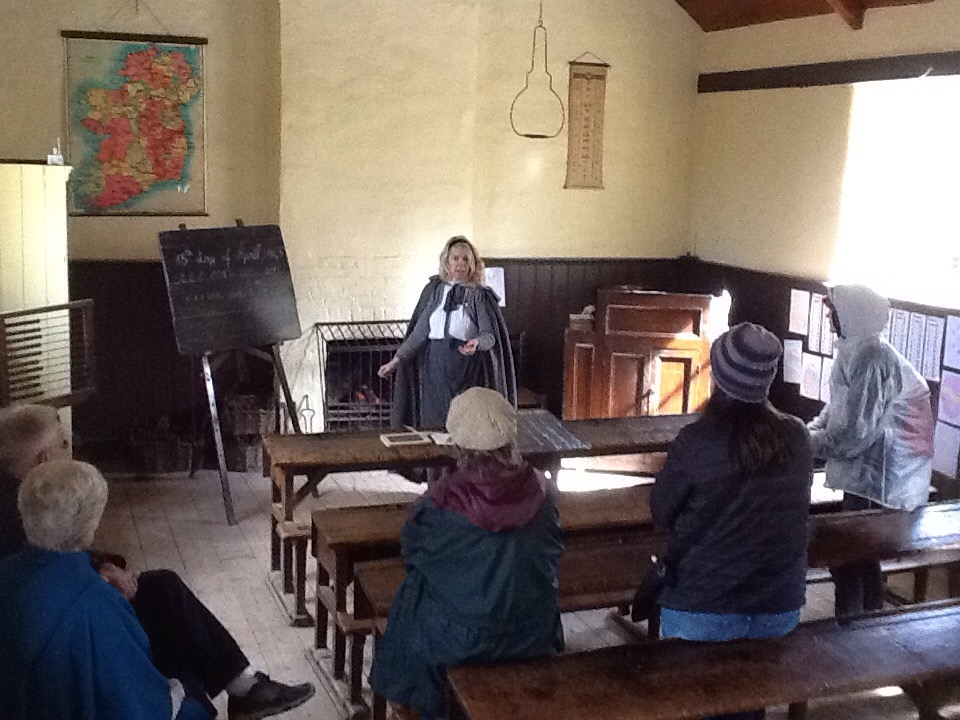
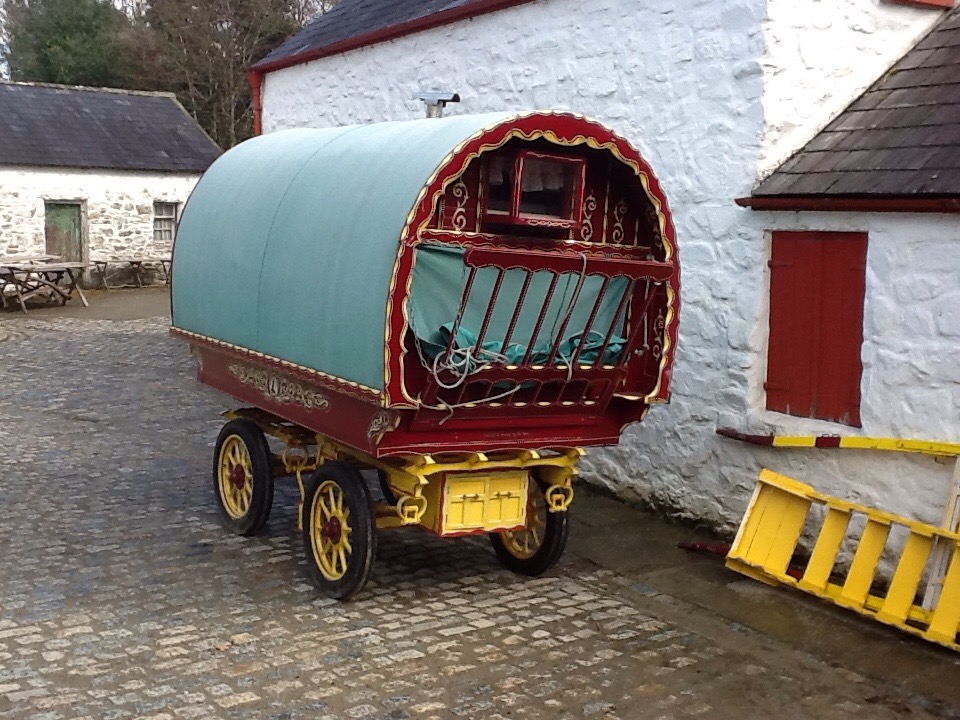 The tour of the park is by sequential numbers, and includes a couple of churches, various houses and cottages and occupational demonstrations. One of the houses was undergoing re-roofing by a team of thatchers, and there was a working blacksmith, and a schoolhouse teacher overseeing a group of student visitors.
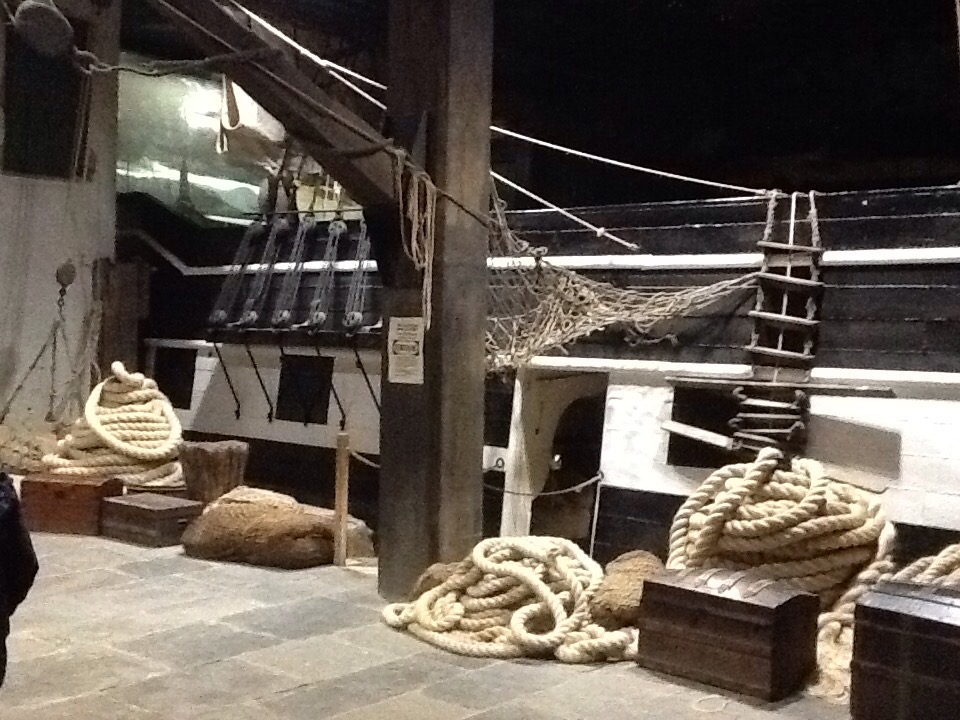
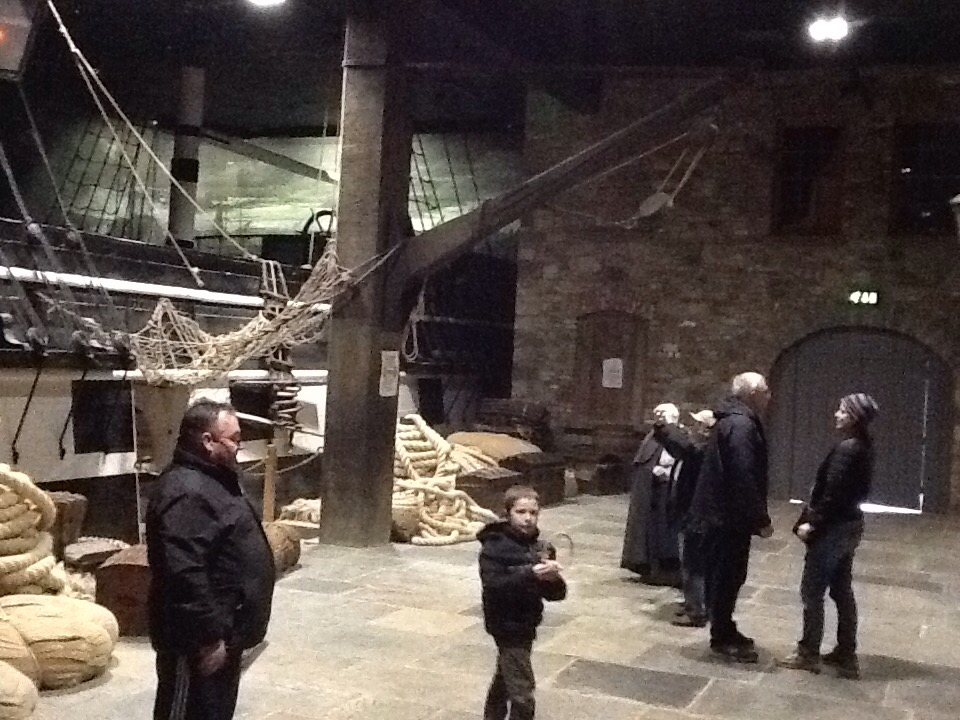
 The sequential tour takes you to dockside at Belfast, and aboard a small ship equipped with racks of bunks for emigrant families,
 and then you emerge onto a Boston, New York, or Baltimore street and proceed to a Pennsylvania farmstead, which was Mellon’s journey from Ireland to his grandfather’s farm in western Pennsylvania.
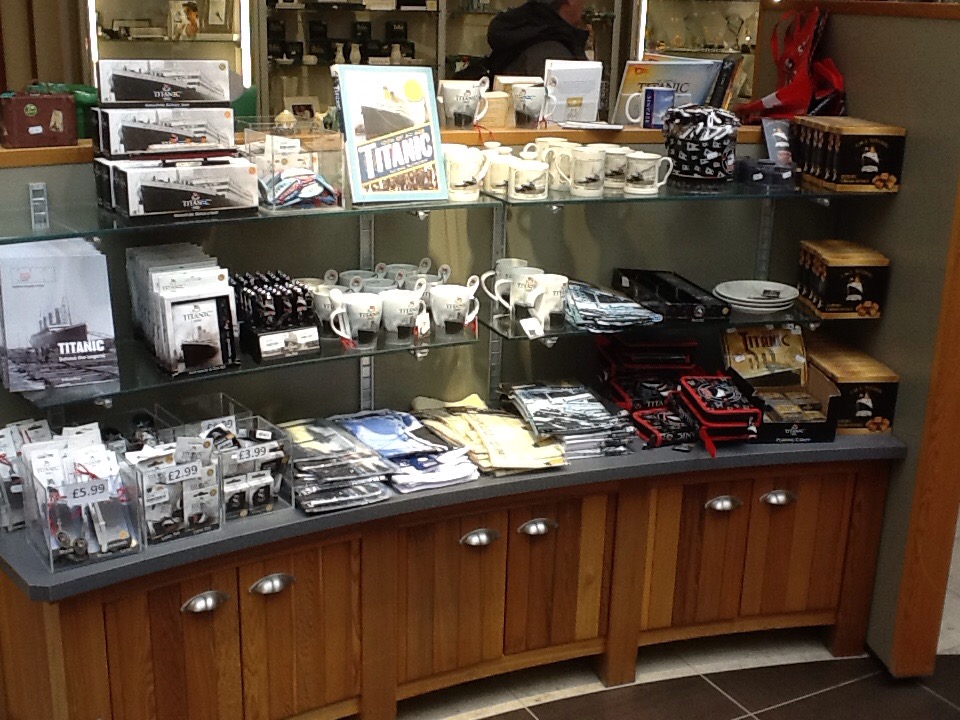
The Titanic theme figures heavily in the tour and the gift shop, as the ship left Belfast as its last port of call, and was one of the many tranport opportunities for immigration in the early twentieth century. As spartan as third class might have been aboard the ships, it was probably a higher comfort standard than many travelers had ever experienced.
This is an interesting and worthwhile visit, and would justify a much longer opportunity. There is a neighboring Center for Immigration Studies to facilitate research in life and genealogy that other tour participants got to check out. I dawdled through the presentations, however, and didn’t complete the America part of the museum tour.
This is a castle on the coast. It is significantly built on a single massive outcropping of stone, so that it is effectively surrounded by a deep gorge in place of a moat, and accessible only by way of a tapering courtyard and a bridge that was at one time a drawbridge.

 The site was a Christian, Viking and then Norman fort location, and became a castle in the 1200’s. It was last occupied by the MacDonalds of Antrim. Its gatehouse is defended by several cannon salvaged from one of the ships of the Spanish Armada wrecked on the coast. Aside from appropriating the cannon, the clan chief sold off the contents and used the cash to finance renovations and improvements to the castle . Game of Thrones fans may recognize the House of Greyjoy, and Narnia fans may know that the castle was an inspiration for Cair Paravel. Views from the castle are spectacular.

 It was abandoned shortly after a partial collapse in 1639, The wife of the then-current occupant never liked the place, having been married off by order of James I and removed from her London origins, and is said to have complained mightily and hourly about the constant sounds of the sea and surf around the location, finally getting her way and a ride back to London after the collapse — sort of a Green Acres story.

 Recent excavations have discovered the nearby village of Dunluce. We didn’t have much time here, as it closes at 4 PM, so we didn’t have a chance to explore the visitor’s center and narratives.
Jameson and Bushmills are the two most widely known Irish whiskey distillers, and for a while they were actually owned by the same company. Both whiskeys are triple distilled, and then brought down to proper proof by the addition of water and blended with other whiskey and neutral grain spirits. The excursion went to the Bushmills distillery, which included a stop in the cafeteria for lunch. No cameras allowed in the plant, since the distillery tour actually goes through the malting, fermenting, distilling, and bottling areas, unlike Jameson. In fact, at present there is a bottling line for Jameson in the plant that is leftover from the joint ownership days and that still bottles Jameson until the Jameson bottling plant completes its current expansion.
Jameson makes much of the fact that it is Triple Distilled, and gives you a wee splash of bourbon, Scotch, and Jameson to compare the tastes of single, double, and triple distillation. Bushmills triple distills its whiskey too, which is indeed a hallmark of Irish whiskey, but the tour doesn’t crow about it. Like Jameson, it offers multiple lines of aged whiskey and even some single cask (unblended) whiskeys, as well as bottle-your-own 12 year old reserve. Your tour ticket stub entitles you to a shot of Bushmills 7 or 12 year whiskey.
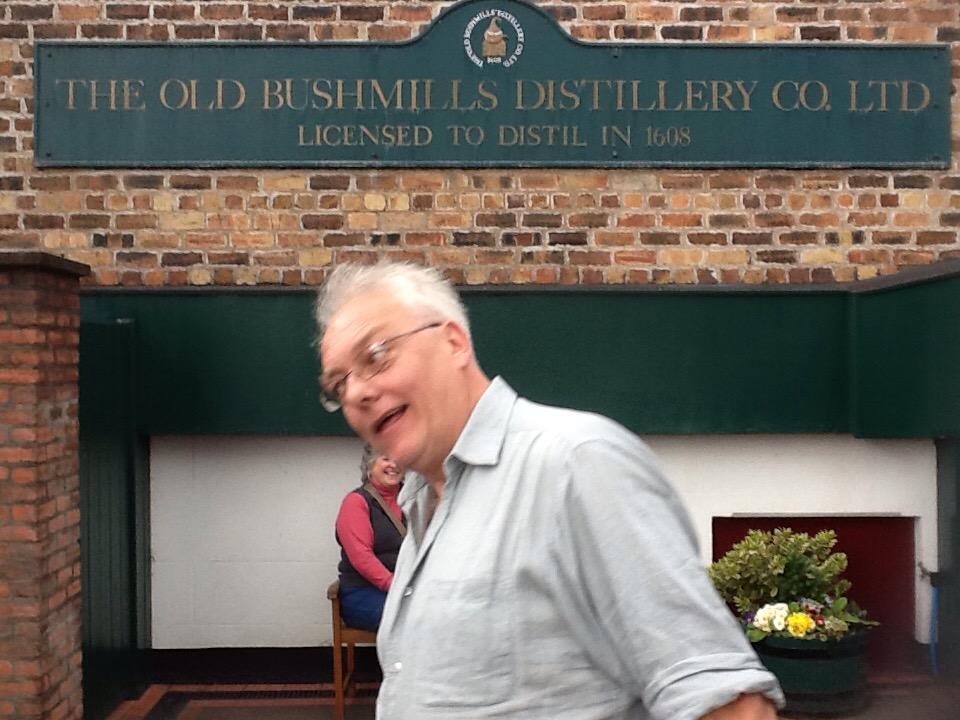
Here’s proof of our presence.

And here’s James, doing his photobomb thing.

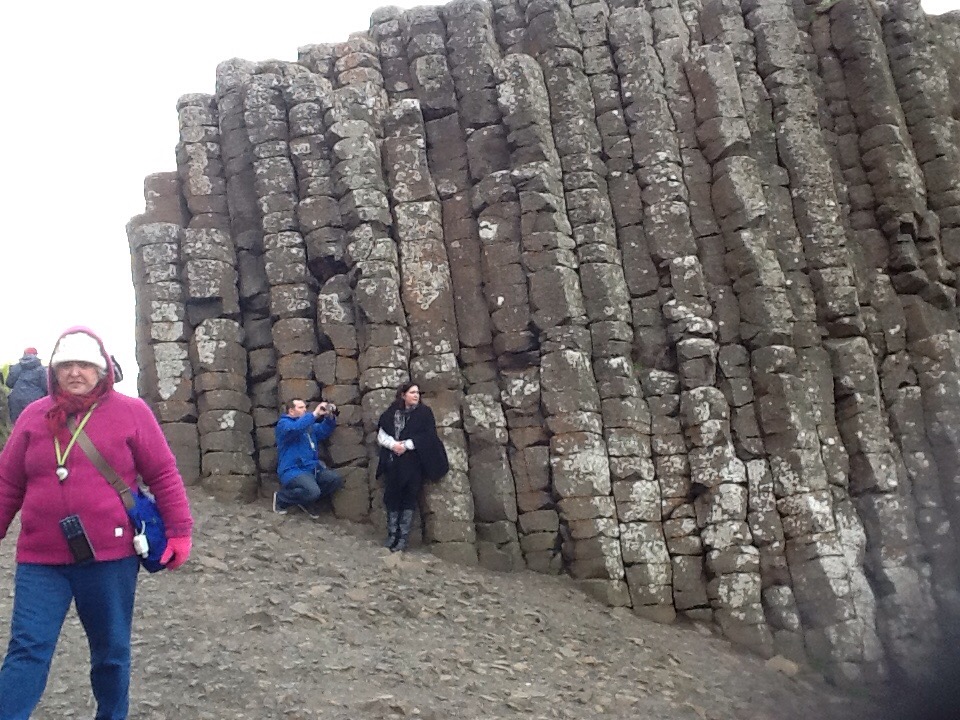
The legend goes that Finn MacCool built the causeway over to Scotland to respond to a challenge, but found the place inhabited by the giant Benandonner, who turned out to be much larger than expected. Returning home and with the aid of his wife, MacCool deceived the giant into believing that MacCool was much larger by pretending to be his own infant son. Benandonner fled back to Scotland, destroying the causeway to prevent pursuit, so only remnants remain on the coast of Northern Ireland, near Bushmills.

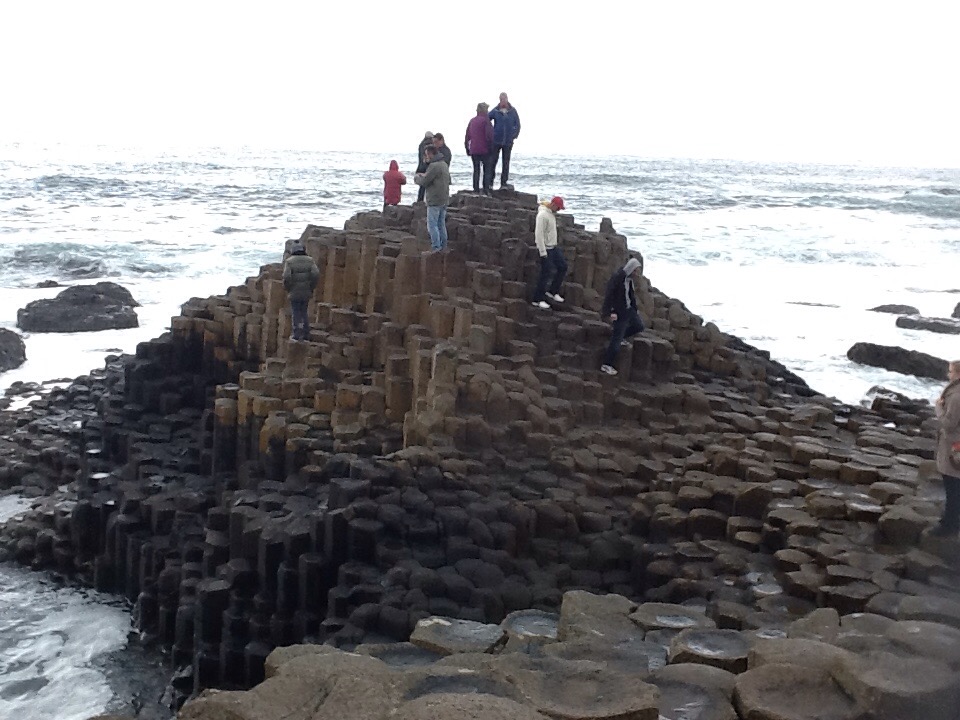 The causeway is actually a weathered ancient basaltic lavaflow that has split into thousands of hexagonal pillars, although many of the pillars are actually pentagonal, indicating that nature wasn’t paying close enough attention to quality control. The tour took us there on a long day’s excursion in Northern Ireland, first to the causeway, then to Bushmills distillery, then to Dunluce castle.
The weather was blustery, and walking around on top of the pillars is an exercise in caution. Some areas are dry, and some are wet, and the individual pillars are different levels varying by inches, so it’s very much a matter of planning your route as you proceed. The visitor center is large and architecturally interesting. The audiovisual presentation area has benches to sit on and big pillows on the floor for young kids to flop on, and of course there’s a tea room café and gift shop. I was rather intrigued by some history books, but the currency in Northern Ireland is sterling, not Euros, which was what I had in my wallet. Besides, I can get that book on our Kindle for about six bucks.
In one area you are walking on top of the pillars.
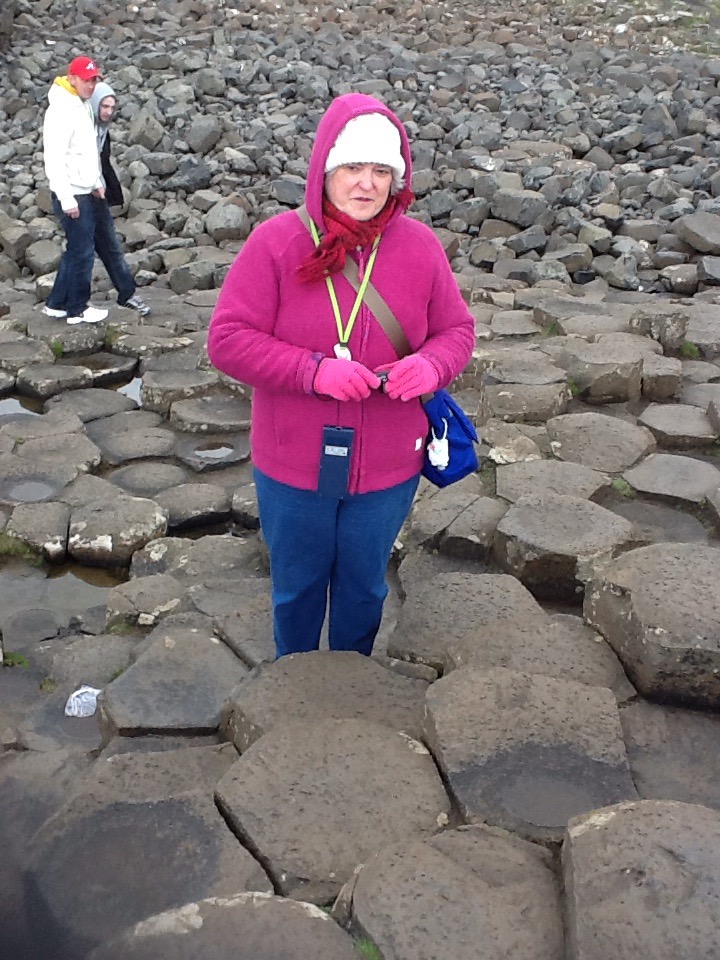
In another, you are walking beside the pillars.
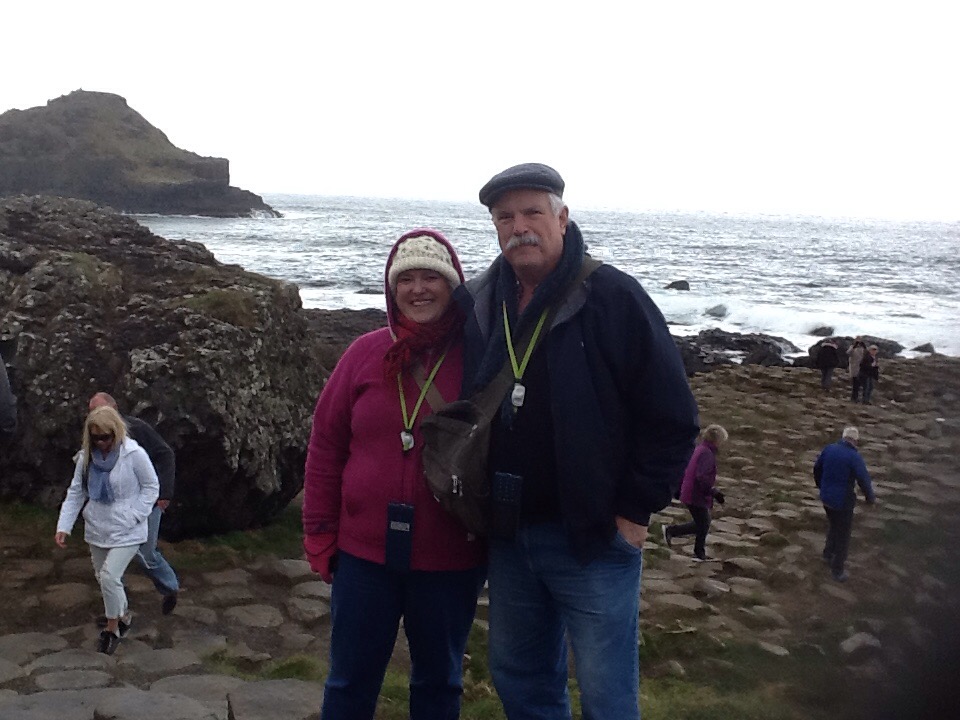
We gave our camera to Bronagh to snap our picture, and she proved herself equal to her husband in photobombing.
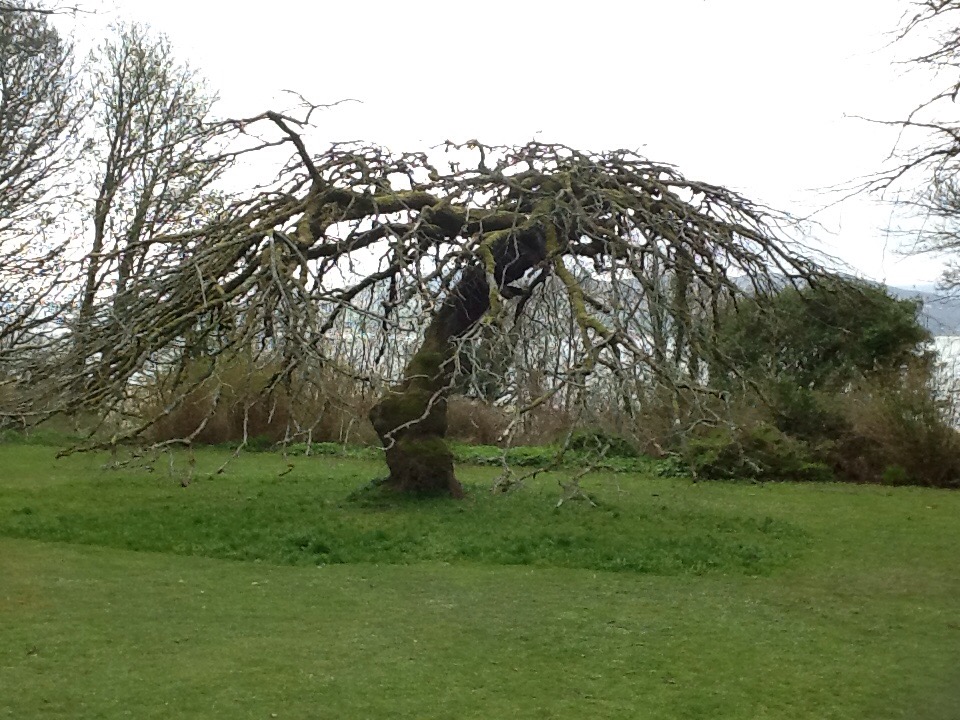
As stated elsewhere, Rathmullan is not a bustling metropolis, owing most of its fame to a historical departure. It has three churches – Catholic, Church of Ireland, and ruined. It has a vacant lot, formerly occupied by a hotel in one of whose rooms the hymn All Things Bright and Beautiful, All Creatures Great and Small was written. It has a pier that used to be a ferry landing, and a statue commemorating the Flight of the Earls. All this is revealed to us on a little walking tour by Deirdre, a local tour guide, during a blustery walkabout. Rathmullan House has an interesting elm tree, a result of grafting a branch of a mutation found in Scotland that only grows laterally onto a regular elm trunk.
That’s pretty much it.
Our accomodation.
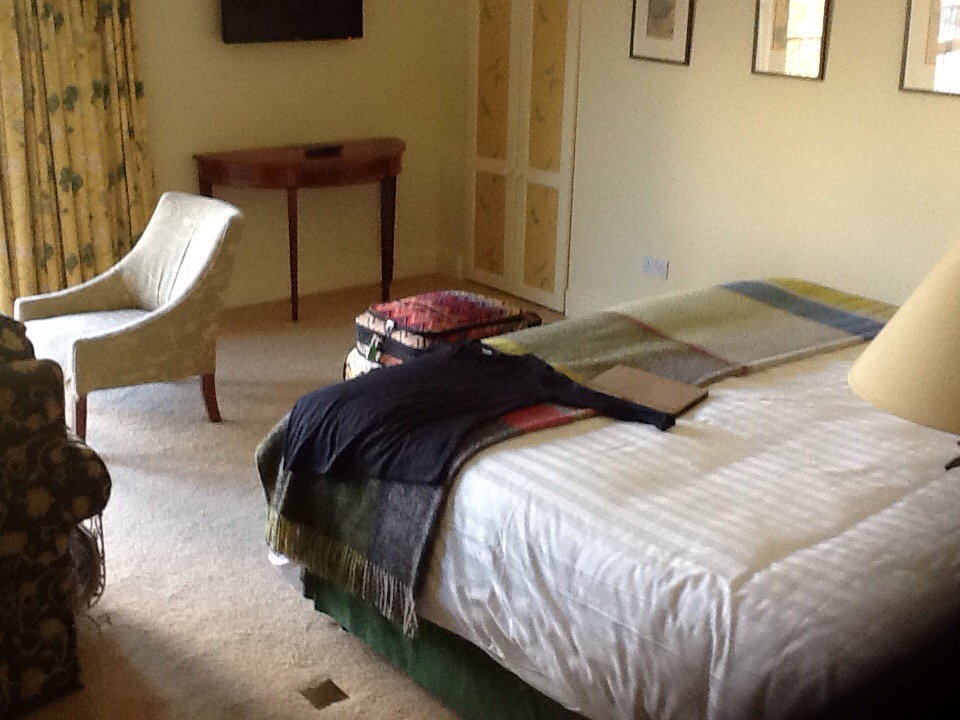
Mostly antique furniture
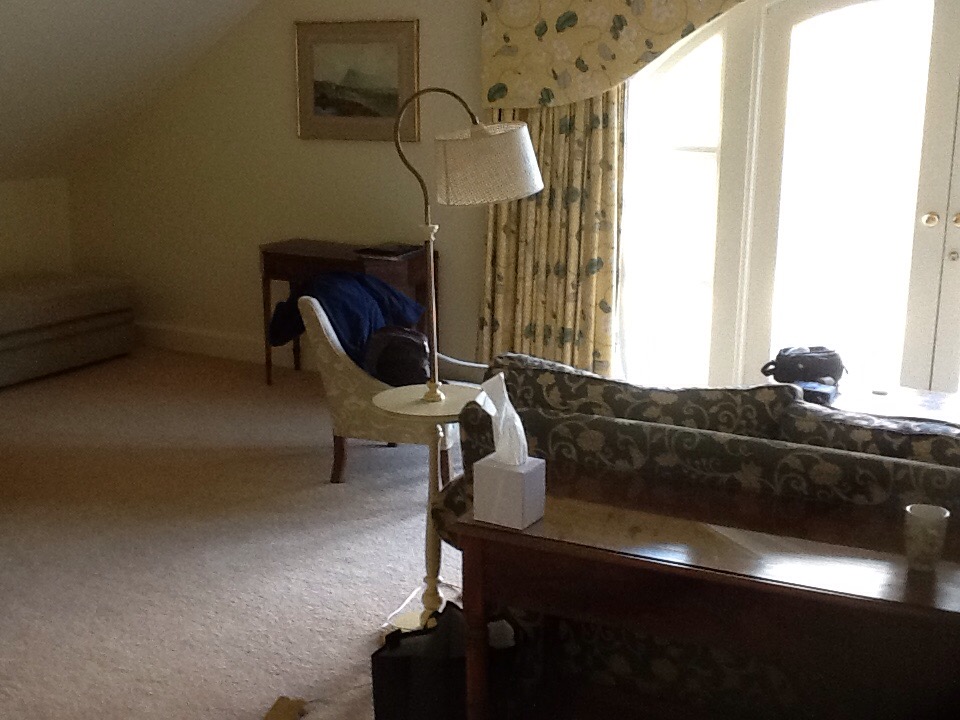
The hotel has water that tastes right out of a lake, not good for making tea in the room in the morning. It also has a dearth of hot water for showers, depending on the rising, breakfast, and departure schedule. We are the only group in the hotel, and we hear that MoW is the only bus tour that Rathmullan House will entertain, as they are generally well booked at any other time of year, and they know and trust Donnie and james and their tour groupsl.
More about the food later, which makes up for all else.
Our bus pulls in cautiously through a narrow gate into a park and drives up to the front door. Cheers and applause for Martin, our bus driver (in front of the bus) for negotiating this and other tight spots.

The house was built in 1820 for a hunting and fishing lodge, bought and expanded by the founder of the Belfast Bank, used as a hikers hostel for several years, and has been expanded and renovated by the Wheeler family since 1962.
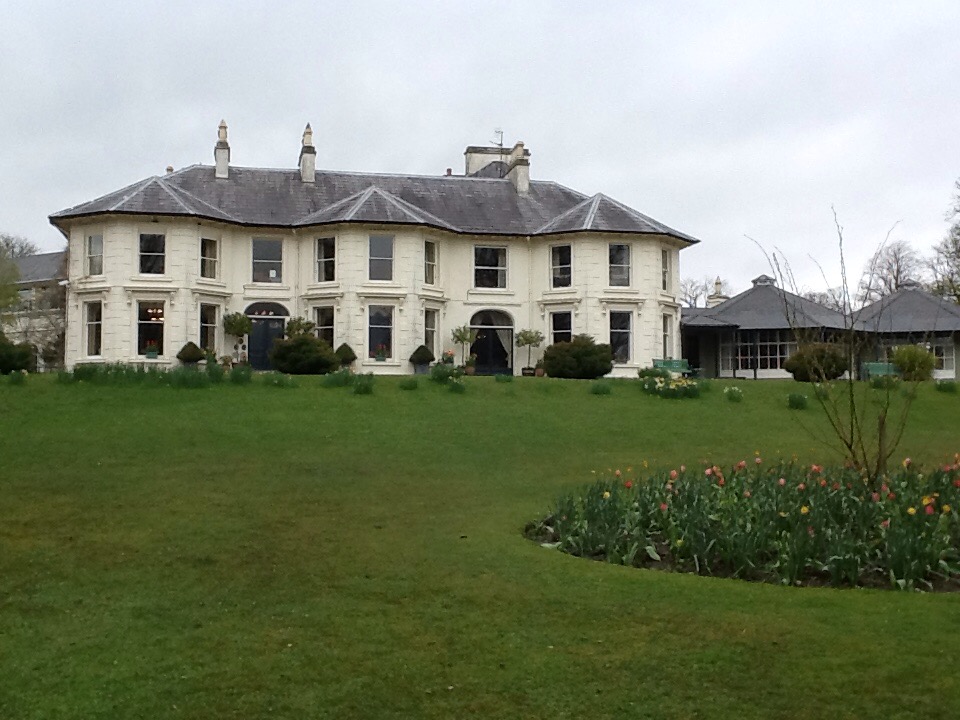
Dining and function rooms to the right of the main building.
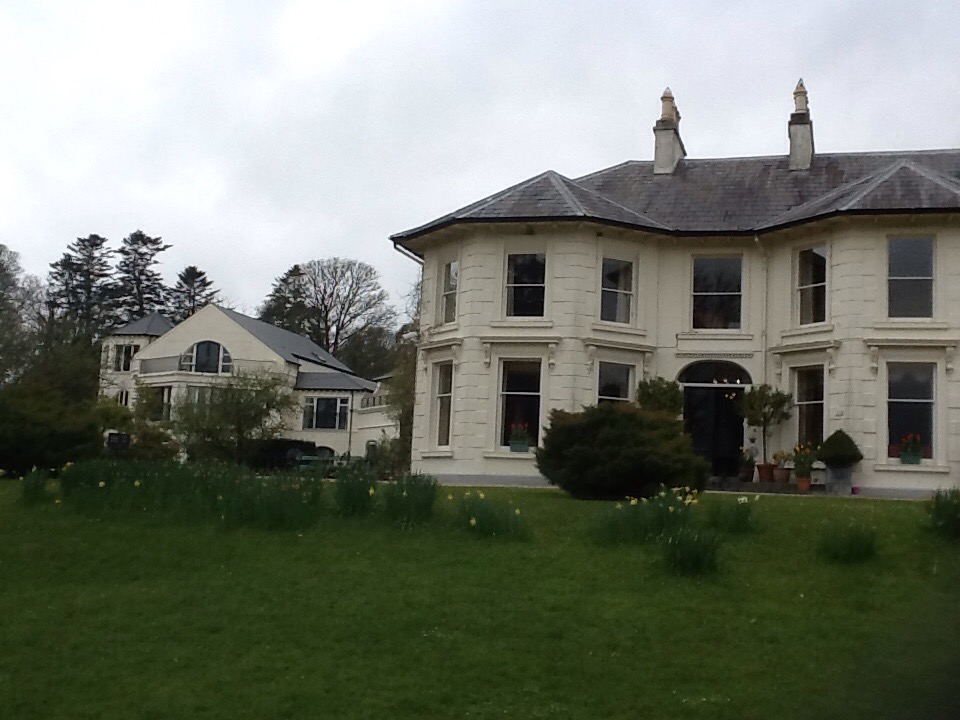
Our room is the arched window under the far left gable, while John and Lynn occupy the corner room next to it with three large bay windows overlooking the park grounds. Down two flights, through the halls and main house to the dining room and back to the room is a distance of .34 miles, according to the pedometer.
On our way to Rathmullan, the bus stops at this place in one of the Gaelic-speaking sections of Donegal. It is pointed out that in Donegal, the signage is first in Gaelic and then in English, in contrast to the rest of Ireland. And Donegal Gaelic is closer to Scottish Gaelic than to other Gaelic languages.
This is a little Village iin the southwest corner of Donegal County. Thanks to a local priest, Father James McDyer,, who was assigned here and fell in love with the location, the people, and the way of life, and felt the need to document and preserve, the village has survived and thrived, He became a champion of the rights and needs of rural people and of economic development. The Village has become known for for its own economic development and for a small collection of cottages from different eras and professions. A little like Old World Wisconsin or Greenfield Village, it features a fishermans’s cottage, a pub and grocery combination, a schoolhouse which is closed at the time, because they are using it to dry material for re-thatching one of the roofs.
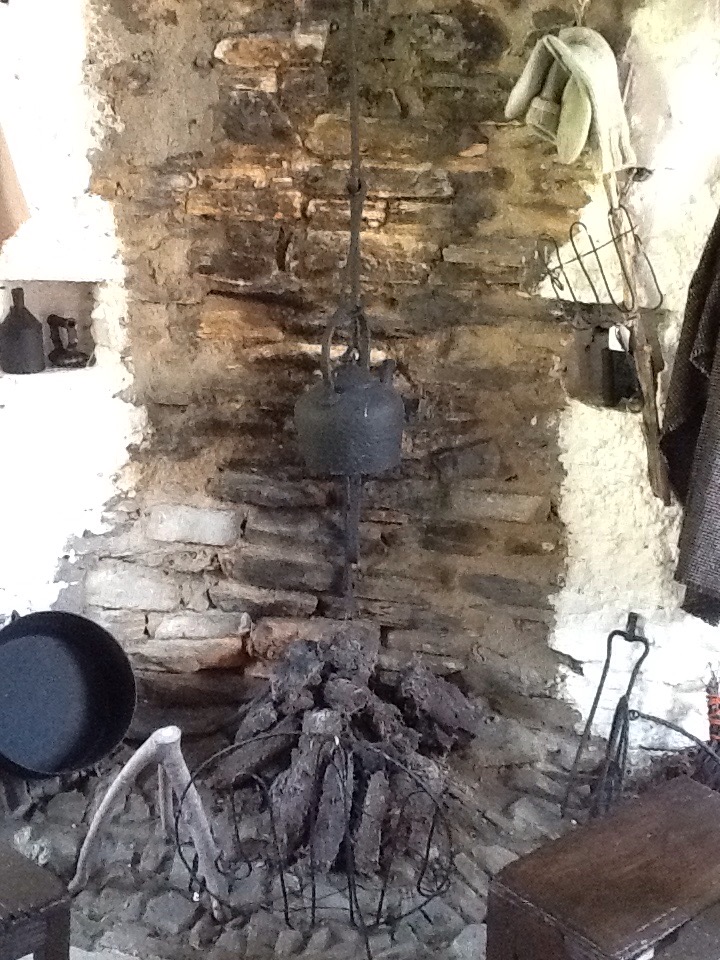
Note the open fireplace and the peat fuel

Pub side
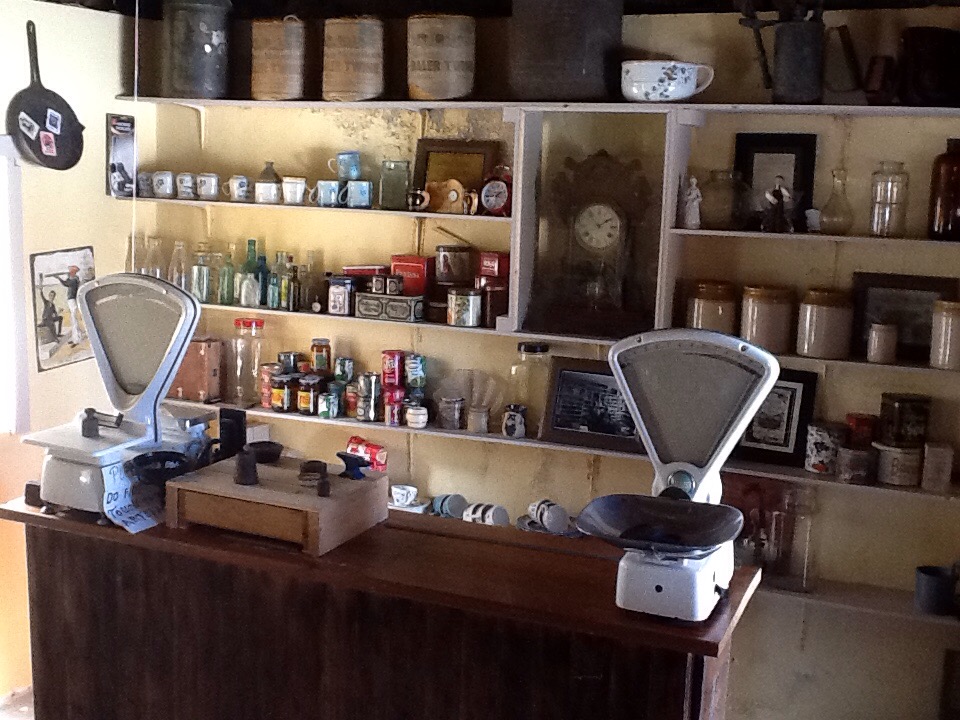
Grocery side

fisherman’s cottage

Decorative marker and smoker
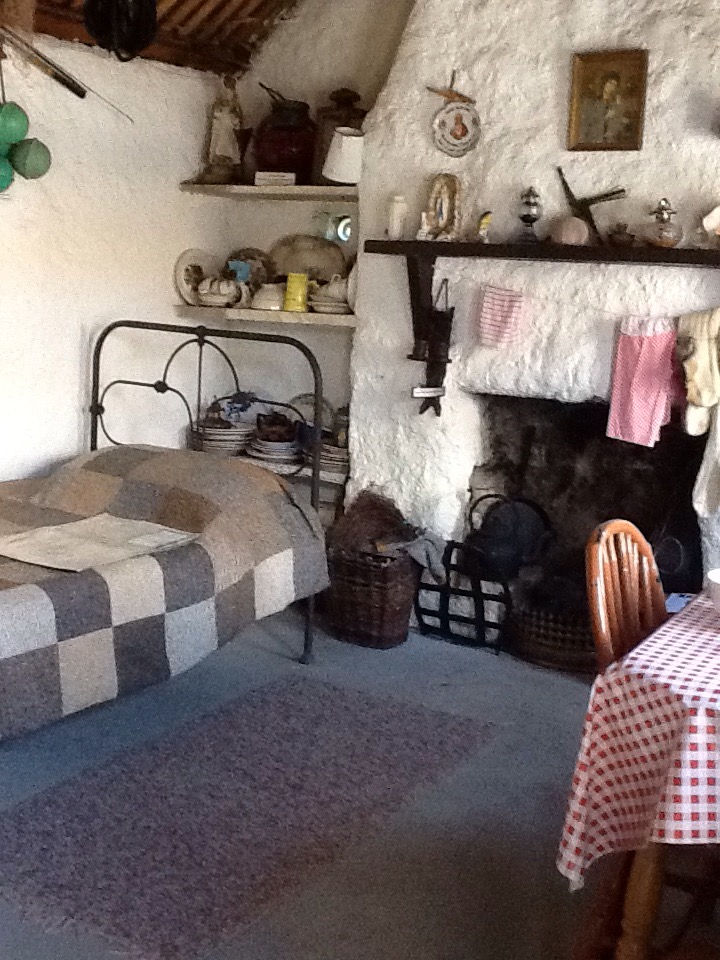
1900’s cottage
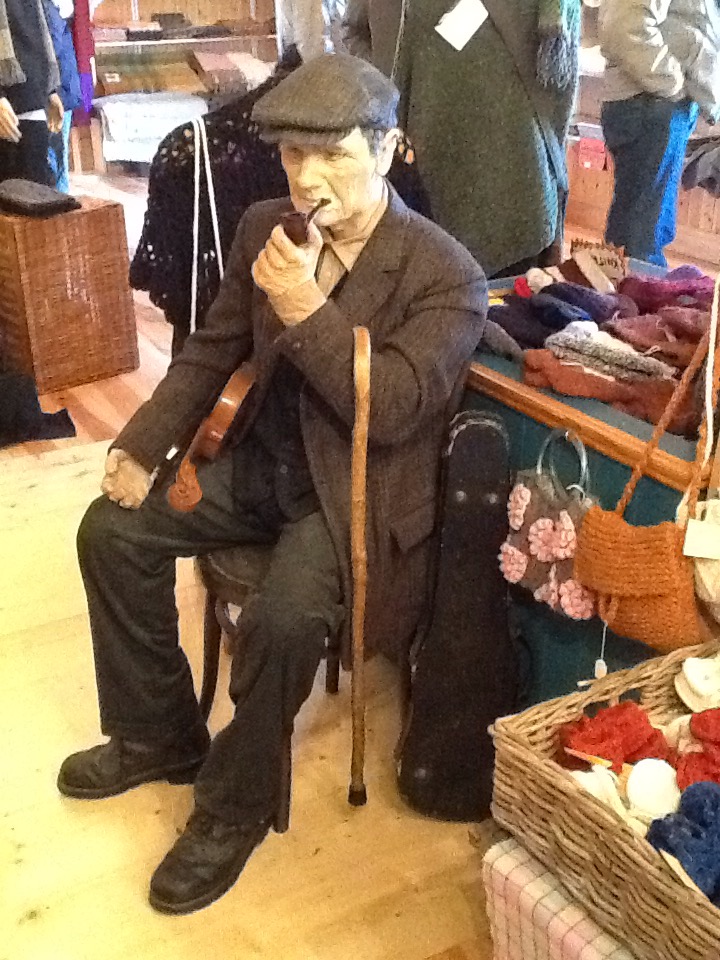
In the gift shop, there are locally made items, and Paula uses her gambling profits to buy a Aran style sweater, under the watchful eye of this gentleman.
We have been hearing from Paula’s sister as well as from other previous tour participants, that Rathmullan House is the gold standard of all the tours as to accommodations, grounds, and food. Paula and I have been to the Lake Hotel in Killarney, and it is hard to imagine anything better.
Rathmullan is a little village on the west side of Lough Swilly. It is probably most famous as the embarkation point for the Flight of The Earls in 1607, when two of the northern hereditary Irish chieftains’ O’Neill and O’Donnell, along with about 90 followers, snuck out and headed for the Continent, hoping to enlist Spanish assistance to throw out English rule in the country. It’s a complicated history of maneuvering between Queen Elizabeth, King James I, Spain, the Scottish Irish and and hereditary Irish clan chieftains, and the goal of the Earls was overtaken by the English detente with Spain following the earlier loss of her Armada and her defeat by the Dutch at Gibraltar that same year. And following the Gunpowder Plot against James, the traditionally Catholic Irish chieftains were in a hard place to be able to swear any loyalty to both the English monarch and the Pope, so the deoarting Earls left some of their children and entourage at Antwerp, where they all died or were forgotten, and they eventually made their way to Rome, where they were accomodated but marginalised and eventually died. This pretty much marks the end of the Irish clan system.
There is a great sculpture of the Flight of the Earls on the waterfront at Rathmullan. My picture is on my camera, not my iPad, and will have to be transferred at a later date. Otherwise, Rathmullan was a ferry point across a long Lough Swilly, and since the ferry has been discontinued, it makes for a long drive to go around. So Rathmullan House is a primary destination nowadays.
On Sunday, our bus takes us from Sligo to Rathmullan for five nights.
Paula has stayed behind with a few of the other Usual Suspects to find a betting parlor and a pub at which to watch the British Grand National horse race. The rest of us take an excursion to a Birds of Prey center, which features a variety of hawks, eagles, owls, vultures and an interactive presentation. This not only brings out the birds, but allows some members of the audence to assume the glove and lure and feed the bird on their arms. The presentation is in an open air area and is delayed by rain. Birds don’t care to fly in the rain, so we take shelter in a petting zoo building, but the skies clear and the presentation moves forward. The presenter rewards the birds with recognizeable dead chicks, explaining that he gets them frozen from egg producers, where half of the incubated eggs turn out to be male and therefore of no use for producing our breakfast food.
In general, the presentation is the most interesting raptor demonstration I have seen. Sorry that Paula missed it. One the other hand, she has had some luck in the little betting syndicate, and the payout for the group is over 700 euros on a total investment of 120. She reports that the race is a jumping race, and that typically of about 70 starting horses and jockeys, only about 18 to 20 actually finish, due to stumbles, balks, separations, and other disqualifications. It’s an exciting race, and horse racing is a big deal in Ireland, so the pub is packed for the race. When we return from the raptor center, she reports that her net profit is 113 euros, which buys her an Aran sweater the next day.
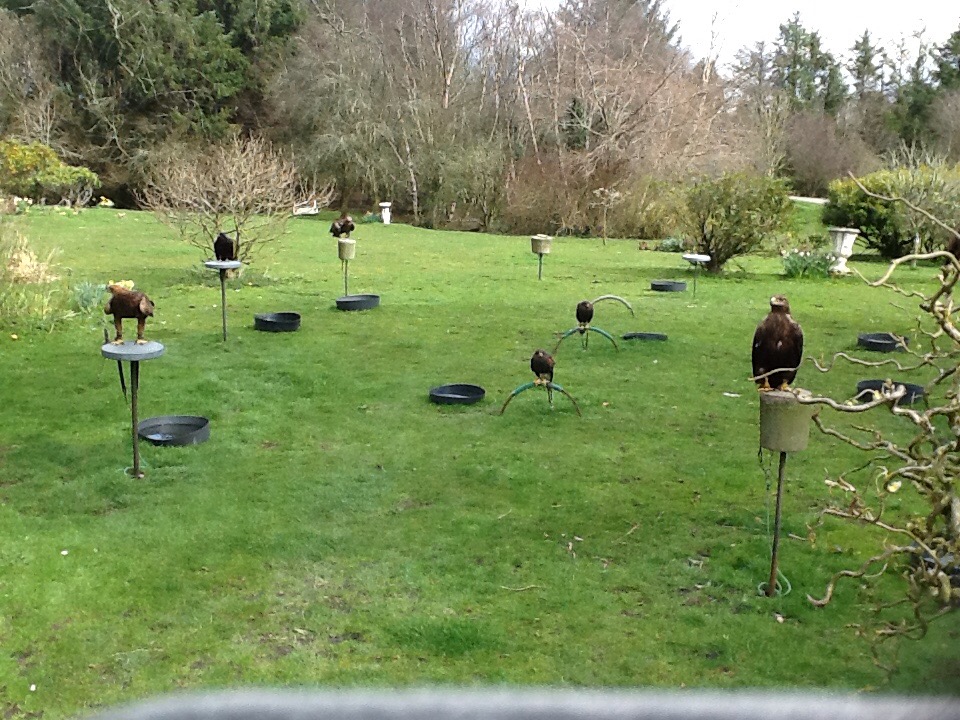
I was far too busy enjoying the presentation to take any pictures.
The second evening’s scheduled concert featuures the boys playing along with Rodney, a master of the concertina. Bronagh steps up to the bodhran for one number.
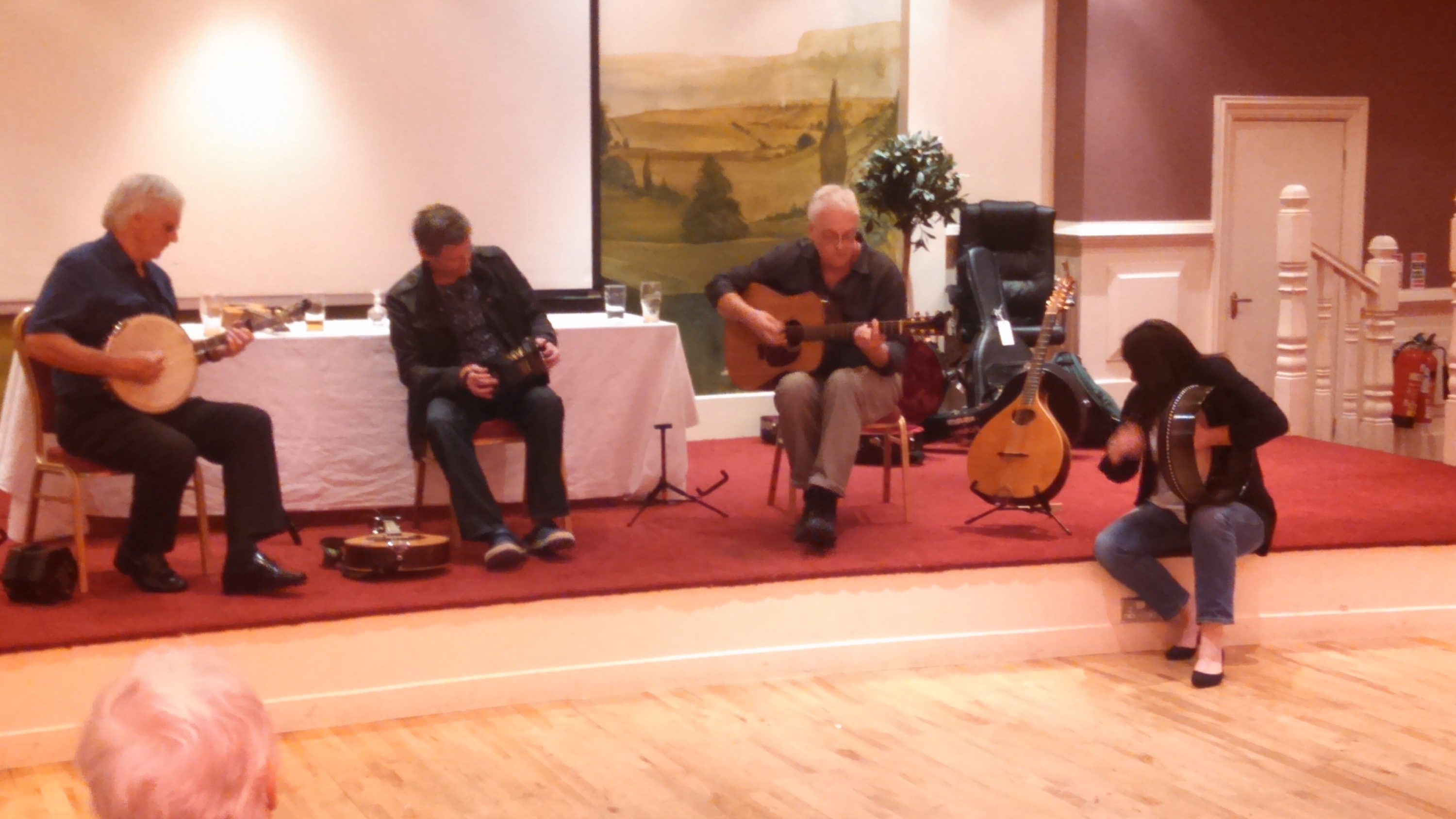
This is joined by a group from a local dancing school. Lighting won’t allow me to capture the dance, but their regalia is striking. The dancers demonstrated some spectacular footwork, at times accompanied by James, Donnie, and Rodney, but otherwise by a more familiar and rehearsed CD player.
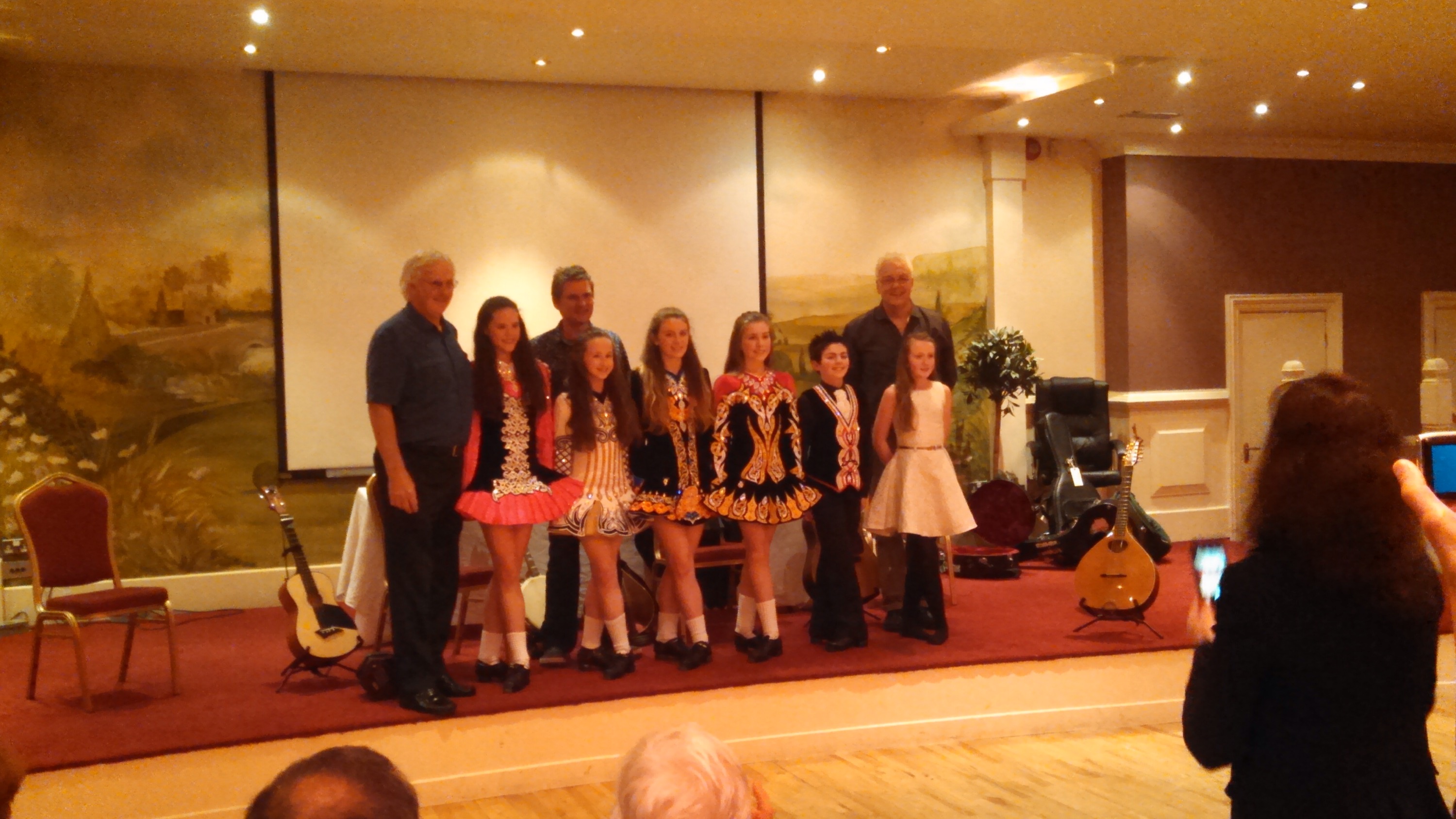
The girl at the far right is not part of the dance school, but is the child of Martin, our bus driver. His family has joined us for a couple of nights, and she is also a dancer and gave us a demonstration. Martin’s four-year old boy was not to be left out, and shakes one out in more of a hip-hop style before falling asleep across several chairs in the back row.
Auriel and Adrian meet us in the morning for a walking tour out at Strandhill, a few miles west of Sligo. Auriel gave a little presentation at our concert the night before, but unfortunately lost her audience’s attention by reading her material, pausing only occasionally to look up and actually talk to the audience.
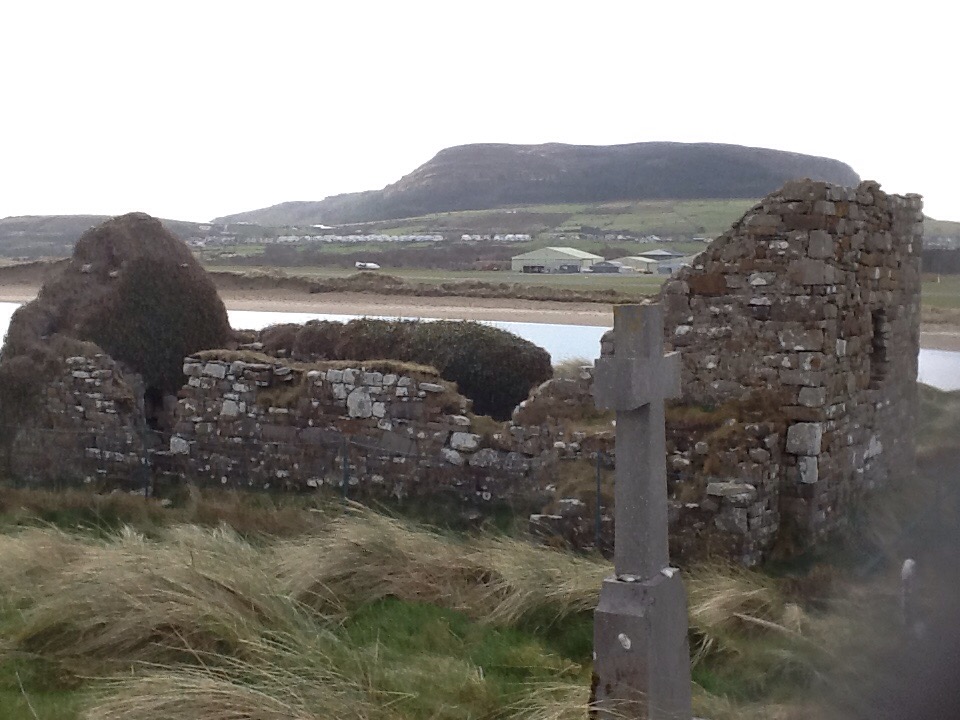
The morning’s walk was along the beach was under the shadow of Knocknarea, the hill near Sligo with a huge cairn atop, said to be the final resting place of Queen Maeve, a warrior queen of the Connacht province in Irish mythology, prodigious in ambition, battle and bed.

Auriel’s presentation includes history, geology, and archaeology, but again is largely read, supplemented by some handouts. Adrian, who is newer to the the tour guiding business, is strong in the mythology, tales, and stories of the land’s connection to events. He mingles with the crowd, while Auriel tends to hare off down the track, waiting for people to catch up.
Strandhill seems to be a popular beach community, with a couple of trailer and RV parks along the shore. It features summertime activities, including a music festival and a Warrior’s Run up Knocknarea and back, and surfing. The walk goes over the dunes along the shore out to a church ruin and graveyard, across from Coney Island, once inhabited by many families and rabbits (coneys) but now just rabbits. It is said that a ship captain from Sligo named the Coney Island off Brooklyn New York after this Coney Island due to the high rabbit population. At our furthest point on the walk a squall hits and we find ourselves walking back to the bus in rain and sleet and wind that abate in favor of sun by the time we get back to the assembly point.
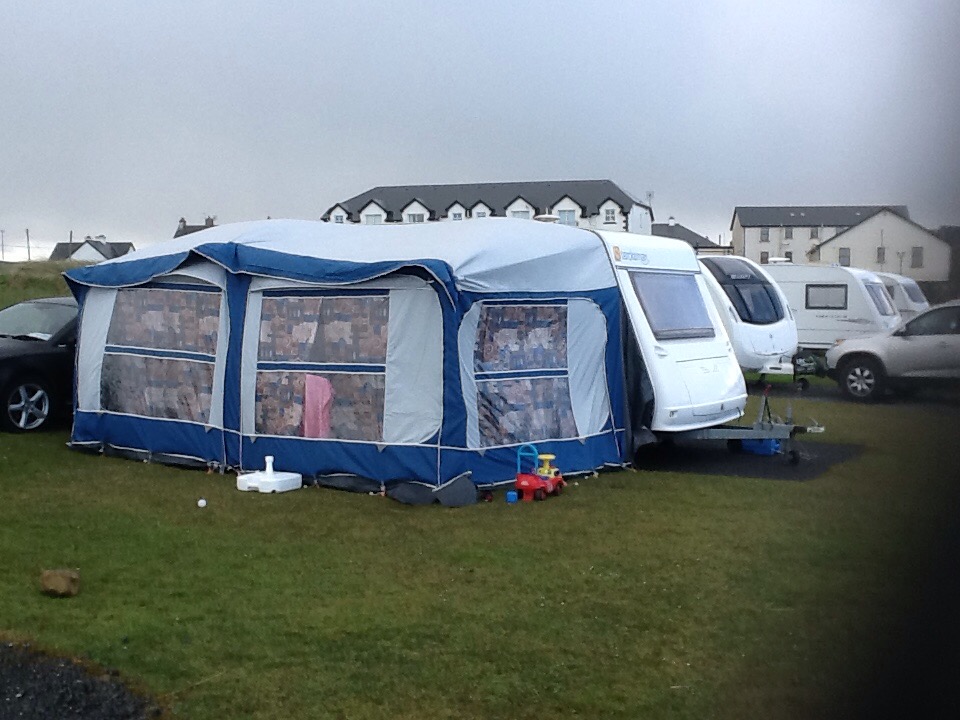
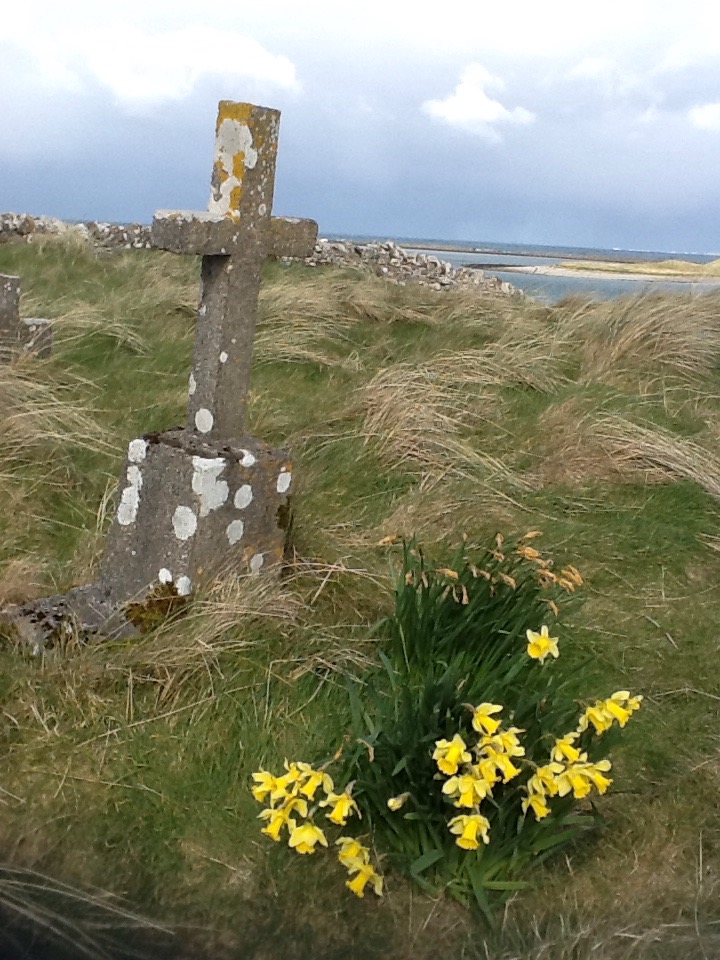
The evening concert with the four kids turns out to be with four virtuosi, two girls 11 and 15 who play Celtic harp and fiddle, and two boys 15 and 17, who are competition winners on button box, penny whistle, bohdran, and fiddle. An unscheduled concert turns into one of the tour’s highlights.
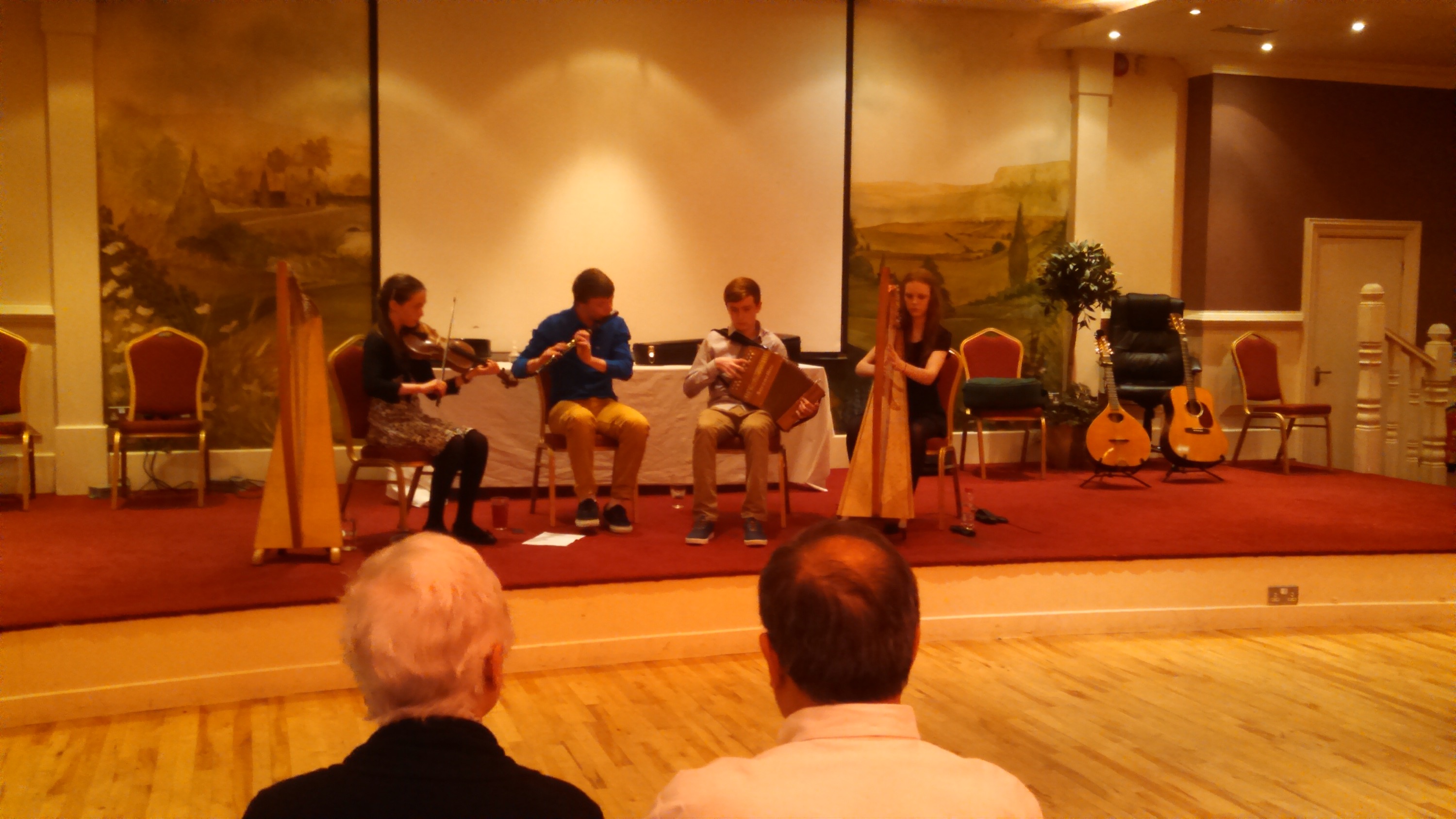
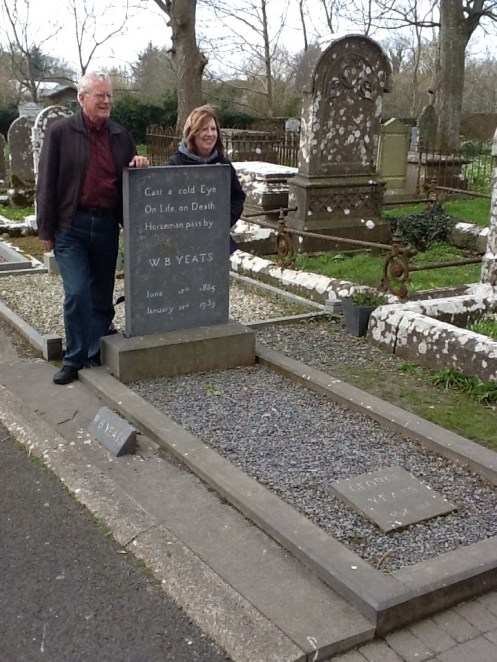
This is the church in Sligo where Yeats is buried. We are met by a local tour guide, Martin Enright, whom James has recently met, and he gives a short presentation on Yeats because our time is limited, but he is definitely up on his stuff and presents well. He’ll be featured on future tours, and he recommends some kids from the local area who are bang-up traditional musicians. Athough there has been no concert planned for this night, the kids are arranged, because the schedules on these tours tend to be flexible.
Rob and Patty. Patty got sick during the tour, and had to leave earl. We missed her music and Rob’s quiet ways.

Martin Enright and our leader, James. To the right is Rosheen, one of the merriest souls on the tour. When the tour was over, it was revealed that she is a nun, and she was extremely grateful to James and Donnie for not blowing her cover.

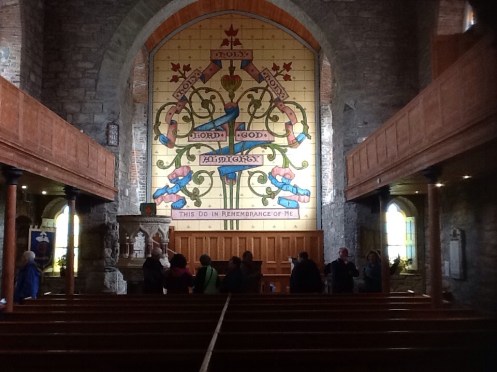
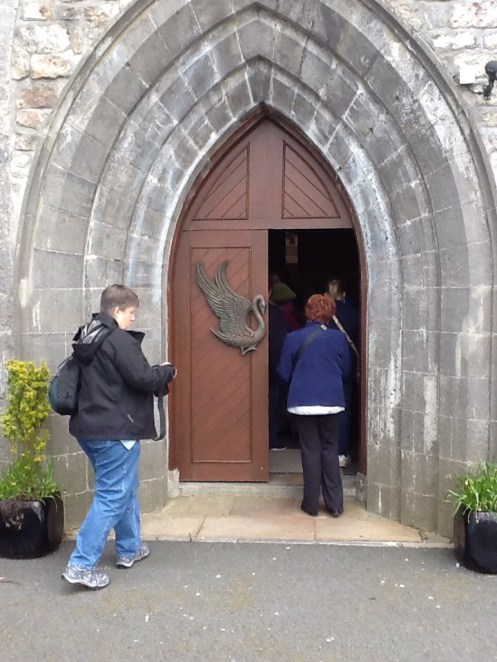
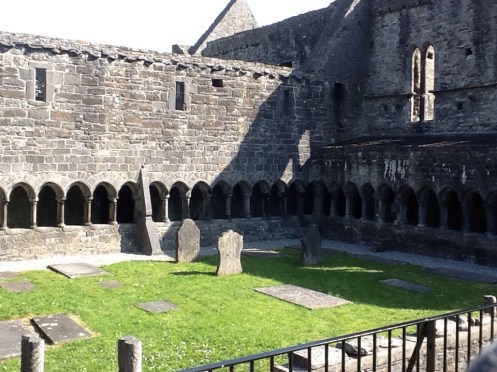
There’s also a tour of Sligo Abbey, another ruined church and friary, that has a lurid history as an In-And-Out Graveyard during the time of the cholera in the early 1800’s, with hastily buried and half-exposed corpses. Bram Stoker’s mother would tell him about the times of the cholera to entertain him as he was rather sickly during his first seven years. Coupled with Stoker’s friendship with Oscar Wilde and Wilde’s mother who was extremely averse to sunlight, you have the seeds of Stoker’s novel about the undead.

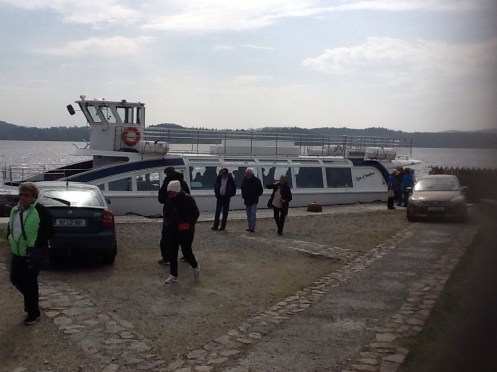
At the same parking lot as Castle Leitrim is the Rose of Innisfree, an excursion boat that takes us out on a cruise around Lough Gill, where the Island of Innisfree is. Yeats wrote about being tired of the city, arising and going to the Isle of Innisfree, but he wrote it while in London in later years, probably remembering with rose colored memory another, larger island on the Lough that contained a house inhabited by a lady friend. The excursion boat takes us around the lake, past Innisfree island, which is small and minimally interesting, but also past some larger islands, one containing the ruins of a church, and the other, more likely island of his memory.
The captain of the boat is an elderly gentleman steeped in the poetry of Yeats, and he recites as we steer around the islands and enjoy sandwiches, tea, and coffee on board. Although there is a full bar, all are grateful for hot tea and coffee. Our captain insists on audience participation, encouraging us to add the final word of some lines of poetry, which becomes a merry touchstone in later days of the tour. He loses his place and repeats himself a few times, both in his narrations and his recitations.

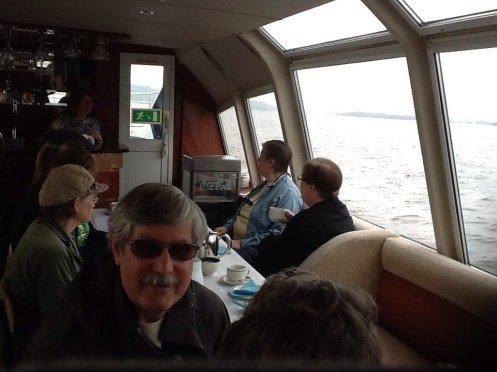
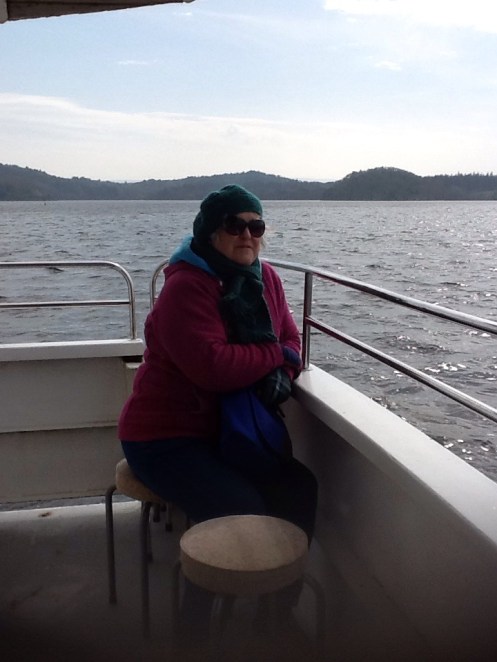
Some hardy souls go topside in the cool breeze after lunch to enjoy an unobstructed view.
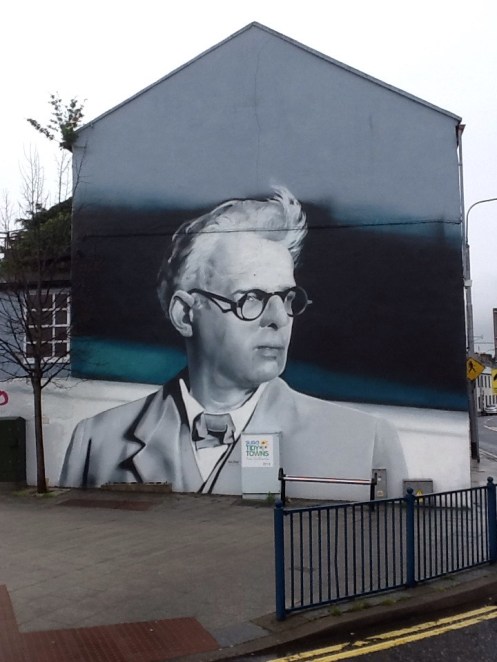
William Butler Yeats speant a good deal if time here in Sligo, hanging out, writing poetry and plays, and generally making himself useful to Sligonian posterity by becoming famous. Then he famously created the Abbey Theatre down in Dublin, dedicated to Irish plays and authors. As a result, Sligo considers itself as prime yeats country with yeats festivals, readings, commemorations, buildings, and so on. Our hotel is right up the street from the Yeats house.

Our first tour is out to Leitrim Castle on Lough Gill. It’s a plantation castle, referring to the English Crown ppassing out land grants and planting protestant and loyal settlers from England and Scotland in Ireland in the 1500’s to prevent Ireland from becoming a staging point for foreign (French, Spansh, Dutch) invaders.

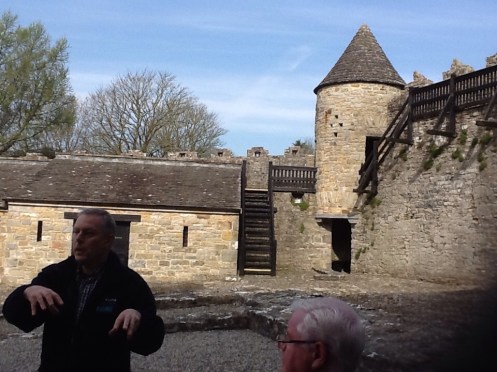
One of the very intersting features, aside from the presentations about plantation and family life, is a discussion about thatched roofs, suggesting that there is very little that is romantic about thatched roofs. It’s a lot of work, and it’s extremely attractive as a home for bugs, spiders, and small mammals.
 travelntrouble