Thursday Ring of Kerry
At 10 we leave for a trip around the Ring of Kerry with a couple of significant stops.
First is essentially a choice between two ring forts.
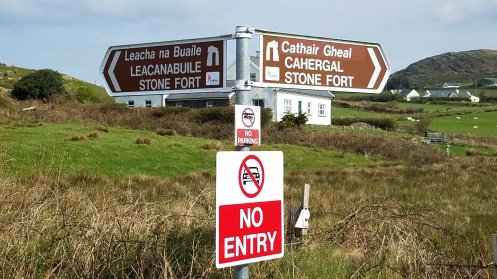
These are residential and defensive structures built on two nearby hills in prehistoric times, maybe in the the third or fourth century for a local lord or chieftain. You can visit both, given enough time and climbing energy. While there is an asphalt path that winds around each hill, it is a little steep and hard on the hip. Not as hard as for prehistoric tribal raiders, though. As they didn’t have a OPW walkway, they had to climb a steep, rugged hill.

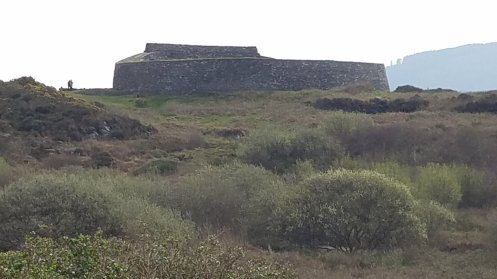
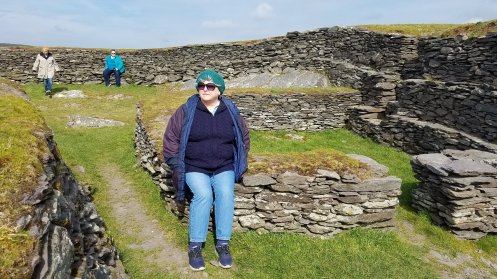
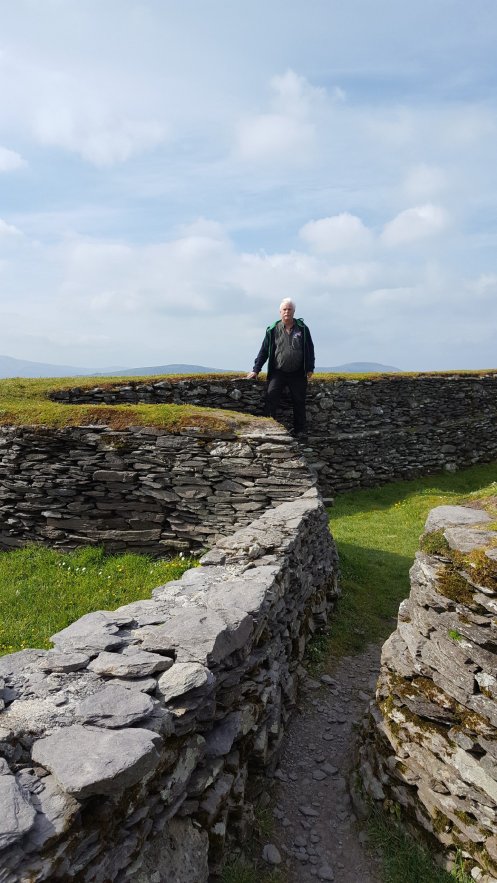
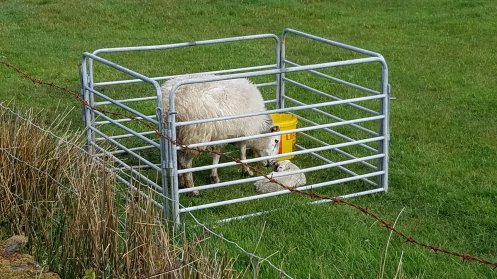
We have time to visit one fort. Part of the trip up is getting by a farmer offering to let you hold and photograph a two-week old lamb (Two euros, please) which we pass. Another stopping point on the way up is to admire and photo a ewe and her day-old lamb. The lamb is still resting from the birth and mom keeps nudging her baby.

Across the landscape is a Norman castle ruin, probably 13th century. Beyond that north across the water lies the Dingle peninsula. Both the forts and the castle are located to observe and defend against raiders from the sea.

And seen from afar, a picture of Bronagh, one of our leaders, stands atop the fort, posing as Boadicea, warrior queen.
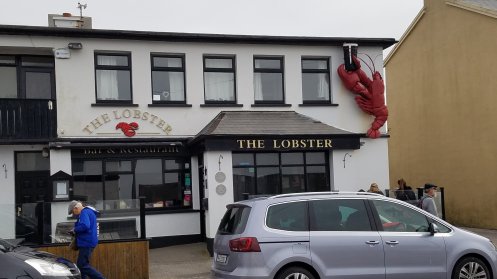
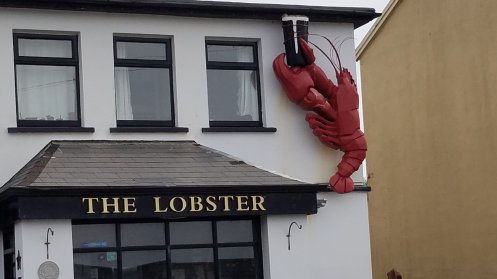
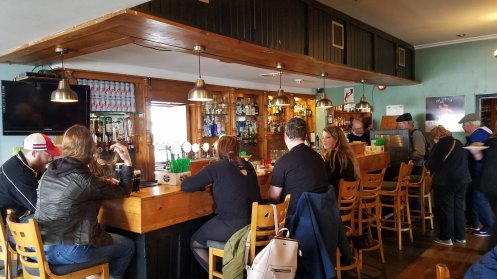
Next is an independent lunch stop in Waterville. We eat at The Lobster, which features a very large crustacean climbing the wall with a pint of Guinness.
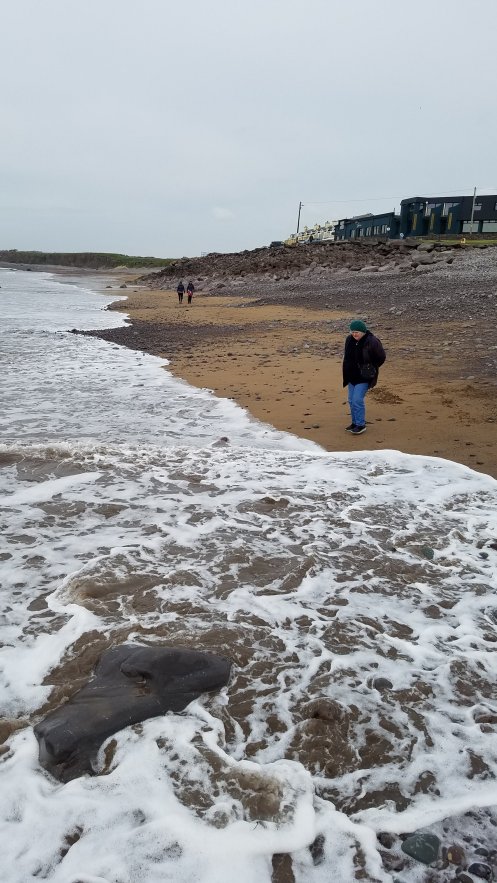
Waterville also affords a walk down to the beach and a game of tag with the surf.
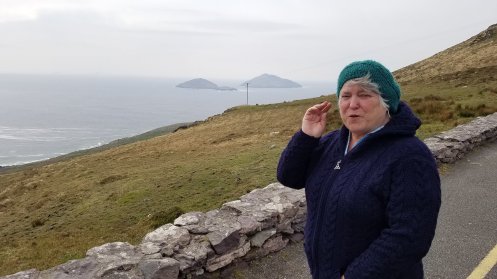
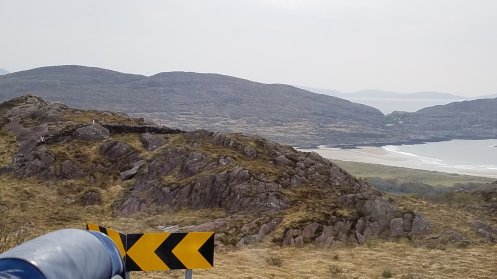
A little farther on we stop at a scenic loookout at the west end of the peninsula
We did this tour eight years ago and one of the days was devoted to the Ring of Kerry. This is an extremely scenic and popular activity, so much that tour buses (and for that matter, heavy goods vehicles, are only allowed to travel in a counter- or anti-clockwise direction. Cars are allowed to drive in either direction, giving you the choice of being stuck behind a bus for miles, or else meeting bus after bus oncoming. Off the west end of the peninsula lie the Skellig Islands, once occupied by monks in stone beehive huts. More recently, they were occupied by Luke Skywalker in exile in the Last Jedi movie.
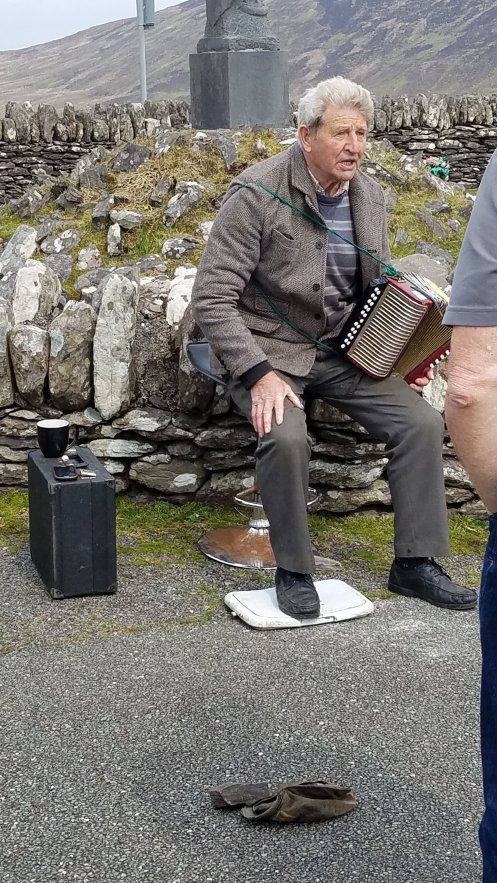
One of the other memorable moments from this earlier trip was stopping when one of our group discovered that she had left her purse, including wallet and passport behind in a public restroom at the beginning of the Ring. At about the same time, one of the MoW leaders got a call from the gift shop next to the toilet facility, to the effect that a German tourist had found the purse, turned it in, and through quick sleuthing, the shop owner had acquired the cellphone number. At this scenic pullout on the Ring, James asked a fellow, who had a large dog and was playing his button box accordion for small donations, if James could pay him to drive back to the shop to retrieve the purse. The fellow agreed, drove James back and returned, and requested a sing-along tune (the only one he knew to sing) along the way that James dutifully led, accompanied by the very large and very friendly singing dog. This tale is all by way of relating that the bus this time stopped at the same scenic pullout, occupied by the same button box player, who recalled the event of eight years past, and launched into the same song on his button box. No singing dog this time, as he had died last year.
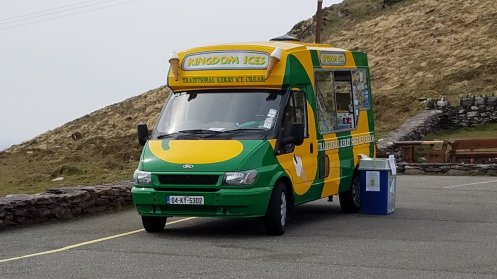
There is scenery and ice cream on offer as well.
On our way back along the southern coast of the Kerry Peinsula, we stop at the former home of Daniel O’Connell, the Emancipator. His claim to fame is the wresting of some elements of Home Rule for Ireland away from British Parliament, and even more, the repeal of British laws that forbade Roman Catholics from holding any local, regional, national, or parliamentary office. The home is now operated by the national OPW, and while a few of the group enter the house (5 euros) others ramble the grounds, the strand, the gardens, and the fairy walk.
After that, no more stops and we head back to the hotel, nap, and dinner, with a MoW concert.
The concert begins with Paula and Jim presenting a cutting of a short play about Grace Gifford Plunkett, the tragic bride of Kilmainham Gaol, in the aftermath of the 1916 Easter Rising, followed by the more recently composed song about her and Joseph Plunkett sung by James. The play deals with her incarceration for political activity seven years afterward, along with her description of the wedding in the prison chapel hours before Joseph’s execution. Several teary reactions in the group.
 travelntrouble