Kilmainham Jail and Jameson Distillery
Our two main objecives for Monday are the Jail and the distillery. Kilmainham prison is the first prislon to experiment with confining one person to a cell. The population soon overtook the plan, with women, children, and men all crowded into the cells and corridors. It wasn’t until much later that glass was installed in the windows on the theory that light and fresh air all year would contribute to driving out bad tendencies. And since the population was largely people who couldn’t pay their debts, as well as violent and political prisoners, the overcrowding became a massisve problem, especially during the famine years of 1845-50, when it was typcially 6 men to a cell and women and children down to 9 years of age put up in the corridors. In those five years, 30,000 peop;e passed through the prison.
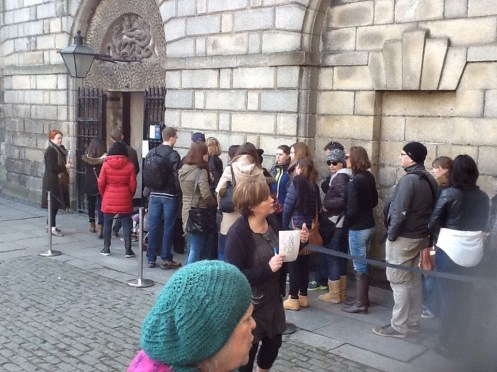
The prison is a popular attraction. Even earlier in the day, the lines are substantial.
If you have seen the Daniel Day Lewis movie, In the Name of the Father, you have seen the inside of Kilmainham. and it is cold, damp, dark, and unfriendly. And the writings inside make it quite clear that the authorities were all about making conditions worse on the inside than poverty and starvation on the outside.
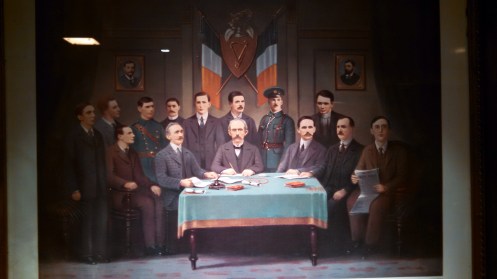
One of the most significant events was the execution of 14 men who were leaders of the 1916 rising. they were “tried” by courts martial, sentenced to death, and shot, and their particular cells are marked. One of them, James Connolly, had been wounded, shot in the leg in the Rising. So determeined was the commander of the British army forces to squelch the uprising, that he ignored all advice from his underlings and authorities in London and had the rebel leaders tried, lined up and shot over the course of 5 days. British law at the time provided that a sick or wounded person could not be executed until he was healthy, and although Connolloy would probably have died within a few days from his wounds, he was strapped to a chair, placed before a firing squad, and shot, thereby cementing all these men into martyrdom, turning a country that mostly dissented from the rebels into a sympathetic populace, triggering a movement toward independence, and eventually preciptating the island into years of civil war. During British rule, there were approximately 180 executions at Kilmainham, and during the civil war under Irish administration, that figure climbed to over 700.
There are references to the 14 all over Dublin. There were actually 16, but one was well connected to London and pssessed USA citizenship as well, and his sentence was commuted and then was pardoned under the General Amnesty two years later, and the second was a woman, the wife of a Polish nobleman, and she was let go. Eamon DeValera eventually went on to become the Prime Minister of the newly inderpendent Republic of Ireland.
 travelntrouble