Killarney plus 2
Today is our third day in Killarney, a long one. We’re heading out to Dingle and Ventry. From there we’ll board a boat to plow out to the Blasket islands off the Dingle peninsula. Once a hardy colony of slate cutters and sheep herders, its last few residents left in 1953 and it is now a sheep and wildlife sanctuary. No predators to speak of for the sheep, except maybe the jackdaws that we are told prey on the new lambs. That seems to be a controversial subject, depending on whether you’re on the side of the birds or the farmers.
We set out at nine and we have a couple of stops in Inch and Dingle. Donnie points out that there are songs referring to Dingle, one of them being Dingle Bells.
West of Dingle is Ventry, where we unload and walk down to the pier. The tide is at ebb, and we have to transport our 44 travelers out to the boat in a Zodiac sort of inflatable, eight at a time, all stylishly attired in coats, hats, gloves, and orange vests.

This takes six trips and is the cause of no small trepidation, because getting down to the dinghy involves negotiating wet and slippery slate steps on the side of the pier down into a bouncy little craft, and none of us are interested in falling on the steps or into the bay.
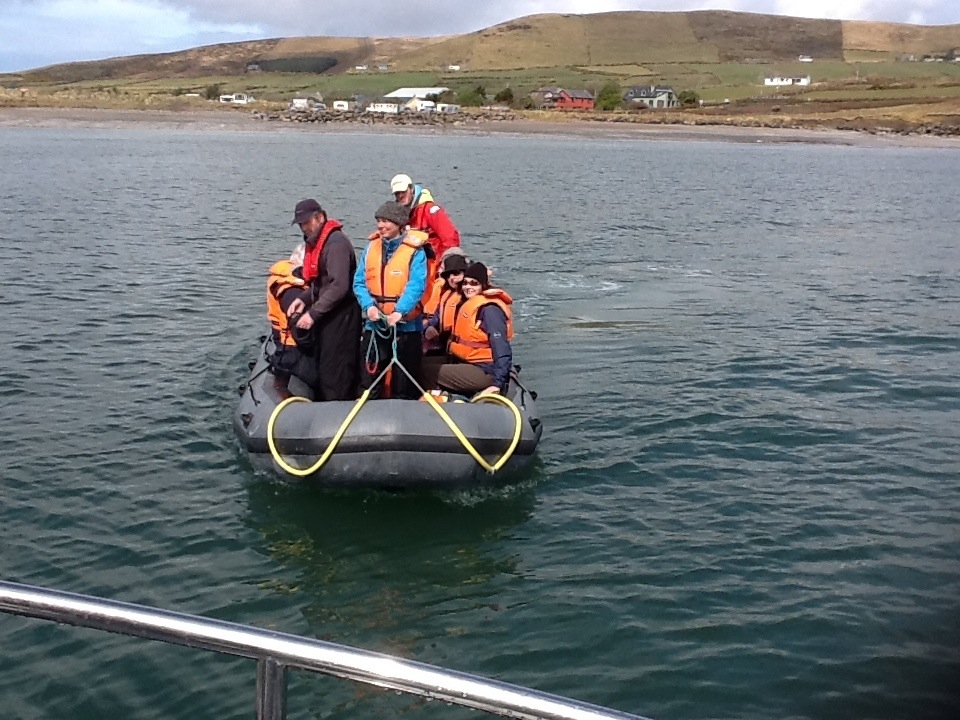
The process takes half an hour, after which we are given some simple instructions by the naturalist on board. We may see dolphins and basking sharks in the bay, since this is the time that they visit. If so, please everyone do not rush to the side rail. We will see seals, in large numbers, so don’t get too excited.
Indeed we see several basking sharks swimming in the vicinity of the boat and underneath the boat, somewhere in the neighborhood of 20 feet long, but they can grow to over thirty feet.

The trip to the Blaskets takes about an hour, and it involves getting beyond the limits of the bay in the doughty little boat. The swell is not high, and not as high as it has been in the previous days, but still causes some upset among our party, but everyone is happy to have seen the sharks.

Disembarking requires the same shuttling, and once on shore, we’re all challenged by a switchback climb up the wet slate rocks. At the top of the climb we are greeted by the sight of various ruined buildings, with a few that are yet intact, residence for workers during lambing season and shearing.
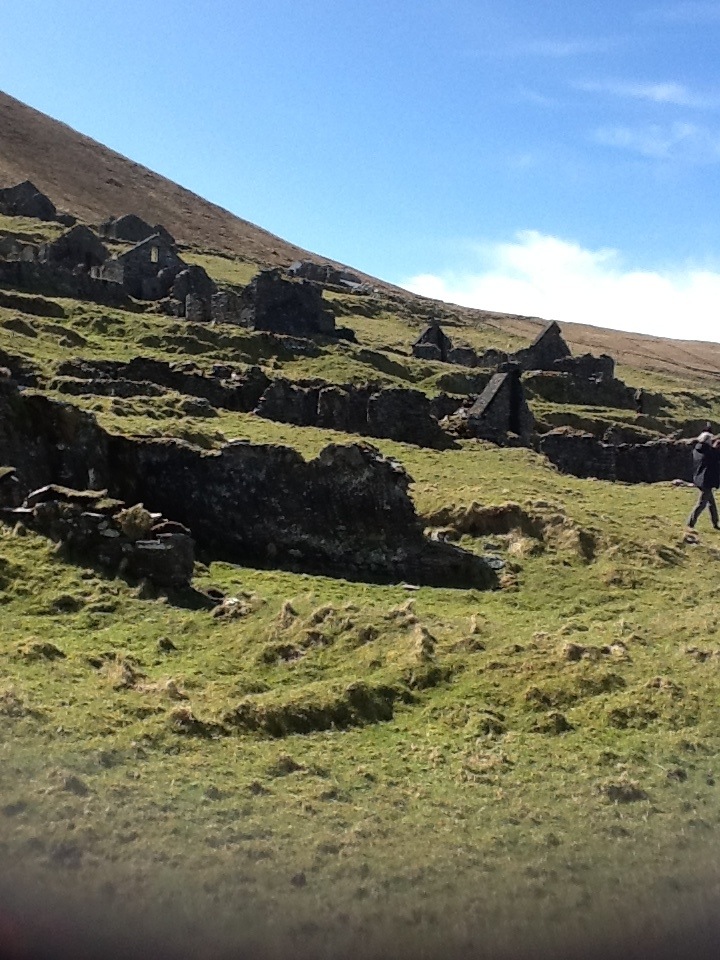
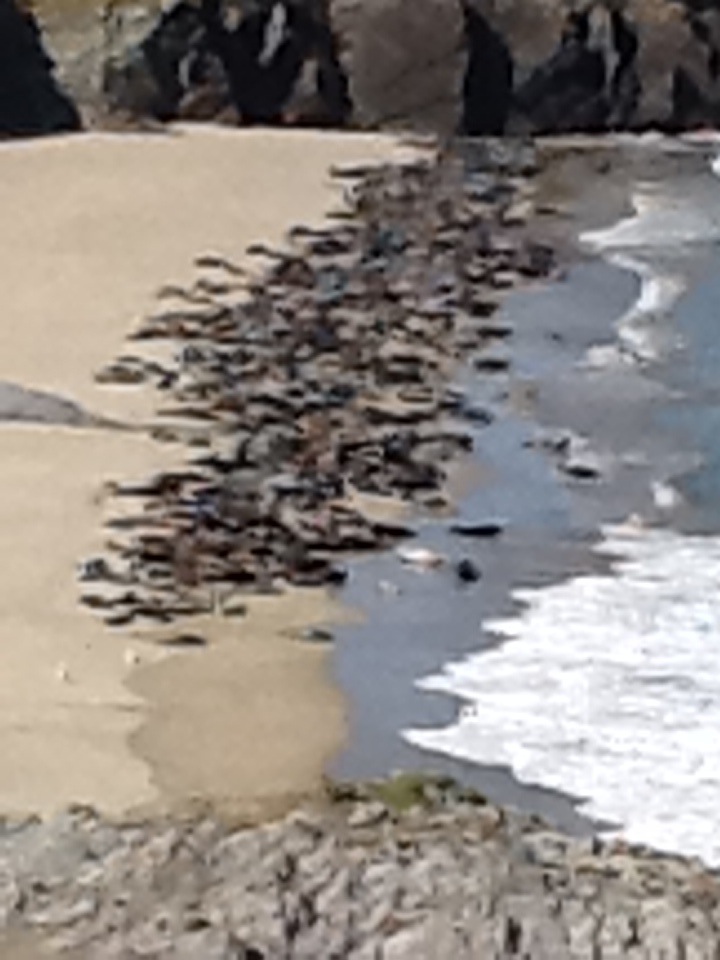
Back in the forty’s and fifty’s, the government announced it could not assure health or emergency care for Blasket residents, so the women and children moved off the island, then the younger men and the older men followed soon after, the last in 1953, leaving the island to the birds and the sheep. And the seals. The beach below was full of seals sunning themselves.
The trip back went somewhat faster and smoother as the boat hugged the coast and was less out in the wind and the swell. And returning to the dock was at high tide, and we were all able to step out of the boat onto the pier.
Getting on to dinner, we stop at the South Pole Inn in Annaskaul, established by Tom Crean (pronounced crane) who was born in the area, went to the South Pole with Scott and survived. So there is a very good local beer bearing his name, and in the pub we are fed fish and chips, or lamb stew, all quite tasty after our seafaring adventure.
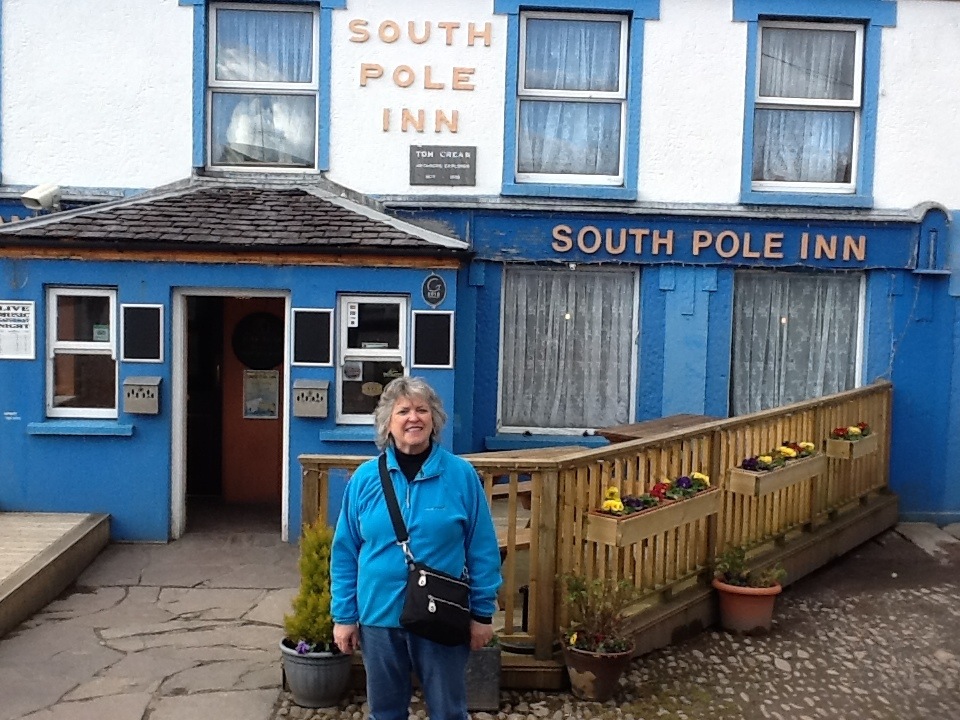
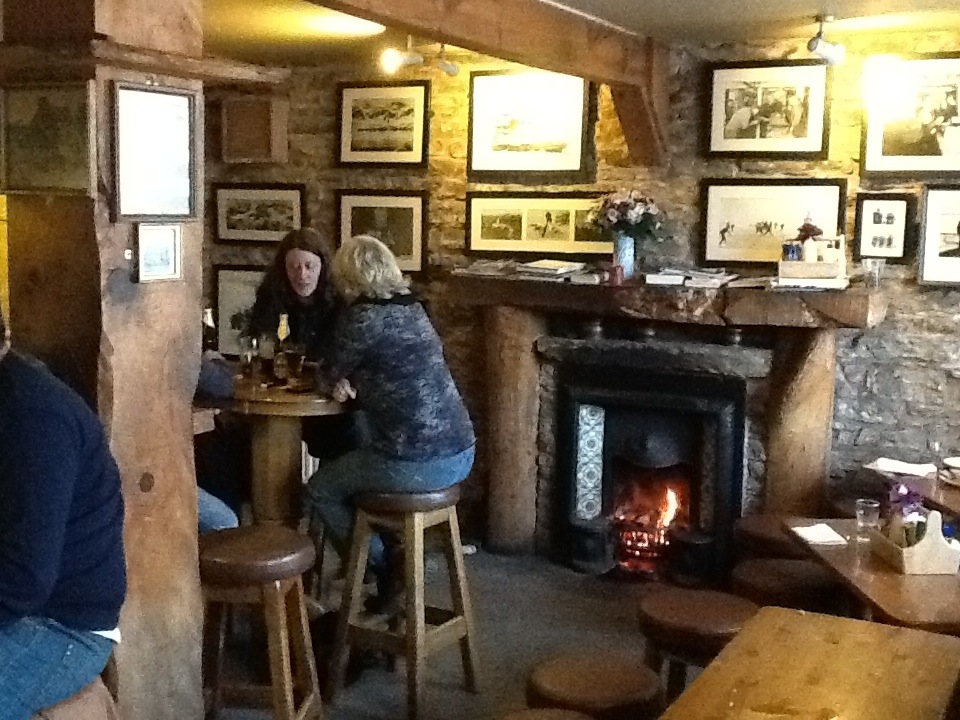
After dinner the boys and others play some tunes in the pub, and the owner spontaneously returns the favor with a song about courting a girl from three miles from Annaskaul. It’s worth commenting that wherever the group plays, locals and other travelers pull up stools, listen, sing along, play along if they have instruments, and offer their own songs.
Back to the hotel, but no concert as such, since it has been a long day and we all have to pack up for the jump to Glengarriff in County Cork. Paula and I do some packing, but feel we owe it to Ken, our friendly hotel bartender, to lengthen our bar tab before closing it out. We are joined by a few others who feel the same.
 travelntrouble